
Mountain clover
Trifolium montanum L.
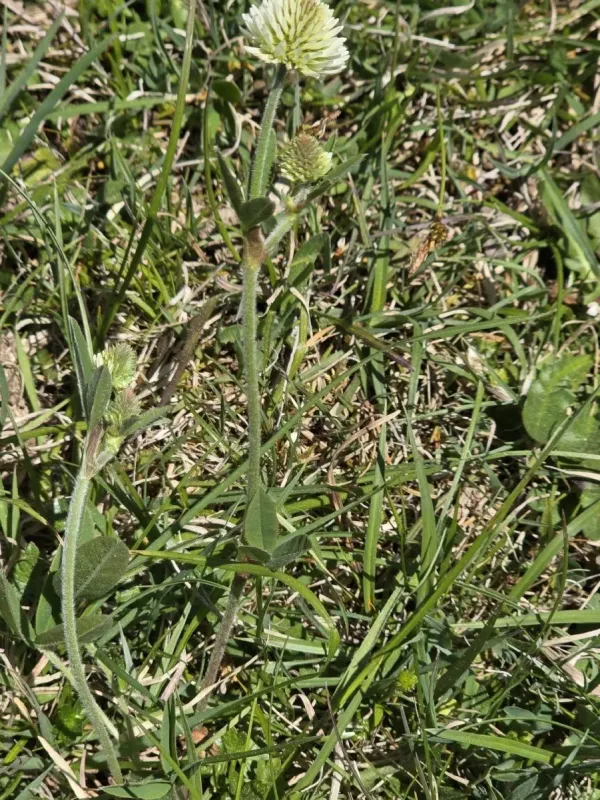
Description
Sowing dates
Mountain clover (Trifolium montanum L.) is a perennial herbaceous plant belonging to the Fabaceae family, recognized for its adaptability to various meadow ecosystems and its potential for agricultural forage use.
The optimal time for sowing this crop is early spring, which allows the seedlings to establish a deep root system before the onset of summer drought periods, ensuring better survival rates.
Seeds should be planted at a shallow depth of 1–2 centimeters in well-prepared, loose soil to facilitate proper germination and early seedling development, as small seeds have limited energy reserves.
In large-scale forage production, seeding rates typically range from 10 to 12 kilograms per hectare, often mixed with complementary grass species to ensure a balanced and stable nutrient-rich sward.
Post-sowing rolling is highly recommended to improve seed-to-soil contact, which accelerates moisture uptake and significantly improves the uniformity of plant emergence across the field.
Growing requirements
Mountain clover thrives in cool, temperate climates and is notably frost-tolerant, allowing it to persist in mountainous regions where other more sensitive legume species might struggle to survive.
The crop prefers well-drained, neutral to slightly alkaline soils; it is sensitive to high acidity, which can inhibit the symbiotic activity of nitrogen-fixing bacteria residing in the root nodules.
While the plant is moderately drought-resistant once established, it requires consistent moisture during the initial growth phases to reach its full productive potential as a high-quality forage.
Sufficient sunlight is essential for optimal growth; therefore, planting densities should be managed to avoid excessive shading, which can decrease the density and vigor of the clover stand.
Regular nutrient management, particularly with potassium and phosphorus, is beneficial for sustaining long-term yields and supporting the legume's natural ability to fix atmospheric nitrogen.
Yield
Mountain clover is primarily used as a high-quality component in hay and pasture mixes, valued for its significant protein content and palatability to cattle, sheep, and other livestock.
In well-managed stands, the yield of green biomass can be substantial, with multiple cuttings possible during the growing season if soil moisture levels remain adequate for regrowth.
Beyond its feed value, the species contributes to soil health by improving structure through its deep root system and enriching the soil profile with nitrogen, benefiting subsequent crops in a rotation.
It also serves as an excellent nectar source for various pollinators, playing a crucial role in maintaining ecological balance and supporting beneficial insect populations in agricultural landscapes.
The nutritional profile of harvested material is high, containing essential vitamins and minerals that promote livestock health and productivity, making it a desirable crop for sustainable farming systems.
Main diseases and pests
Like many legumes, mountain clover can be affected by fungal diseases such as rust and various leaf spot pathogens, especially in seasons characterized by high humidity and poor field drainage.
Insect pests, including clover weevils and aphids, may pose a risk to both leaf tissue and reproductive organs, necessitating regular monitoring to prevent significant yield losses in seed production.
Overgrazing is a common threat that can lead to the thinning of the stand and increased competition from weeds, as the plant needs a recovery period to regenerate its nutrient reserves.
Integrated pest management strategies, such as crop rotation and the use of resistant varieties, are effective tools to keep disease and pest populations below economically damaging levels.
Ensuring proper aeration of the field and avoiding excessive nitrogen fertilization, which can promote lush but disease-prone growth, are key preventative practices for maintaining healthy crops.
Harvesting
The best time to harvest mountain clover for hay is at the full flowering stage, which ensures the optimal balance between biomass volume and the concentration of digestible nutrients.
Harvesting techniques should aim to minimize leaf shattering, as the leaves contain the highest density of protein and vitamins; gentle handling during the drying process is therefore crucial.
If seeds are the intended harvest, timing is critical: the crop should be gathered when the seed heads darken, using careful cutting methods to avoid excessive field loss during the threshing process.
Proper storage is essential to maintain feed quality; the hay must be dried to a moisture content below 15% to prevent the risk of mold growth or heat damage during storage in bales.
Advanced machinery for mowing and conditioning allows for efficient harvest cycles, ensuring that the harvested material retains its nutritional value until it is fed to livestock in the winter season.