
Trifolium dasyurum
Trifolium dasyurum C. Presl
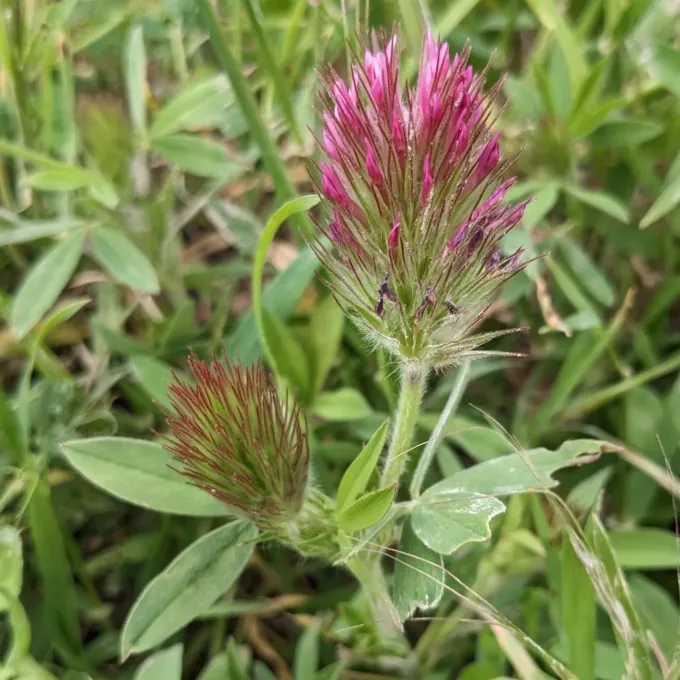
Description
Sowing dates
Trifolium dasyurum is an annual plant, which dictates a spring-focused sowing strategy. The optimal timing for planting begins when the soil temperature consistently reaches 8–10 degrees Celsius, which ensures rapid and uniform seed germination.
In regions with milder winters, late autumn or winter sowing can be implemented to leverage spring moisture effectively. Seeds should be planted at a shallow depth of 1 to 2 centimeters to maximize emergence rates in a firm seedbed.
Seeding rates typically range from 12 to 15 kilograms per hectare, depending on whether the clover is sown as a pure stand or integrated into complex forage grass mixtures.
Achieving a clean seedbed is paramount, as this species is susceptible to early-stage competition from aggressive weeds. Preparing the land well in advance allows for the control of perennials before planting.
Post-seeding rolling is highly recommended to improve soil-to-seed contact. This mechanical operation helps pull moisture into the root zone, significantly increasing the success rate of crop establishment.
Growing requirements
As a member of the Fabaceae family, this clover species performs best in sunny, well-ventilated fields. It shows a preference for loamy, fertile soils with a neutral pH level, which promotes optimal growth and nitrogen fixation.
The plant has moderate drought tolerance once established, though it produces the highest biomass yields with consistent, moderate irrigation throughout the growth cycle. Waterlogging should be strictly avoided to prevent root rot.
Temperatures between 18 and 24 degrees Celsius are considered ideal for vegetative development. Fluctuations in these ranges are manageable, provided the plant is not under extreme thermal stress.
The crop thrives due to its symbiotic relationship with rhizobia bacteria, which naturally enrich the soil with atmospheric nitrogen. Supplementary phosphorus and potassium fertilization are recommended to support high-quality protein production.
Integrating Trifolium dasyurum into a crop rotation cycle is beneficial for soil health. It acts as a bio-restorative agent, improving soil structure and leaving high levels of residual nitrogen for subsequent cereal crops.
Main diseases and pests
Common fungal issues, such as powdery mildew, may emerge in dense stands with high humidity. Proper field spacing and ensuring good airflow are the primary methods for natural disease management.
Pests such as clover weevils can cause significant damage to young leaves and stems. Regular scouting during the early vegetative stages allows for timely intervention, protecting the density of the crop stand.
Weed interference is the greatest threat to seedling success. Using pre-emergent mechanical control or selective herbicides compliant with legume standards is essential for maintaining crop vigor.
Nematodes are less common but can impact soil productivity if the rotation cycle is too short. Diversifying the sequence of crops is the best preventative strategy for long-term field health.
Integrated pest management (IPM) protocols should be applied to monitor for infestation levels, ensuring that any treatment used does not harm the beneficial bacteria involved in the nitrogen-fixing process.
Harvesting
Harvesting for green forage should occur during the full bloom stage. This timing optimizes the balance between total biomass weight and the concentration of essential proteins and digestible carbohydrates.
When producing hay, rapid drying in favorable weather is crucial to prevent the loss of nutrient-rich leaves. The leaves contain the bulk of the forage value, so excessive handling should be avoided.
Silage and haylage production are reliable methods for preserving the nutritional content of the crop. Proper ensiling practices ensure that the fermentation process maintains the quality of the green mass for long-term storage.
Seed harvesting is conducted once the flower heads turn brown and dry. The process requires gentle mechanical harvesting to avoid breaking the delicate seed coats, ensuring high germination potential for the following season.
Post-harvest stubble provides valuable organic matter. Incorporating this biomass into the soil via plowing enhances the fertility and physical properties of the land, providing a strong foundation for future planting cycles.