
Crimson clover
Trifolium incarnatum L. var. incarnatum
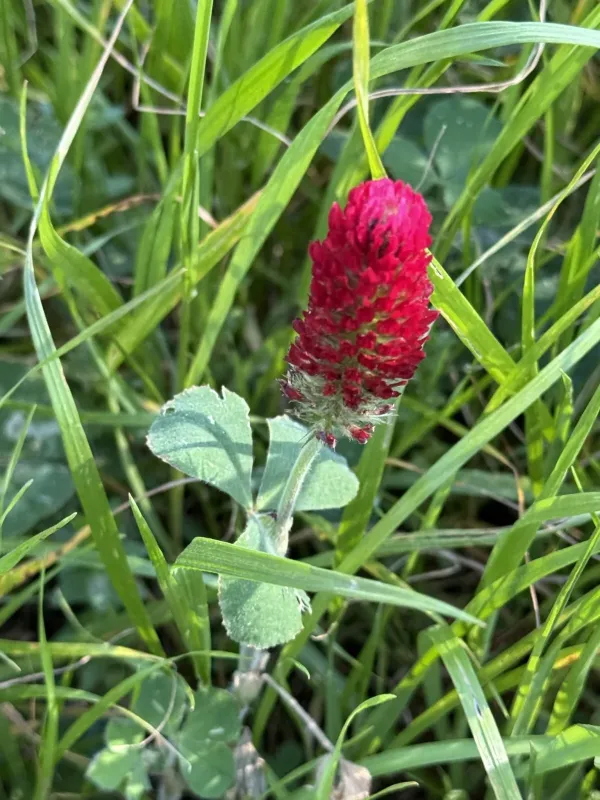
Description
Sowing dates
Crimson clover is an annual legume that is highly valued in modern agriculture for its rapid growth and ability to fix atmospheric nitrogen. It is commonly used as a winter annual in mild climates or as a spring-planted crop in cooler regions.
Planting dates are critical for successful establishment. In areas with mild winters, it is typically sown in late summer or early autumn to allow for winter survival and rapid spring development.
The seeds should be sown at a depth of 1 to 2 centimeters to ensure good soil-to-seed contact. The target seeding rate varies between 15 and 25 kg per hectare, depending on whether it is planted as a pure stand or part of a mix.
Proper seedbed preparation is essential, as the seeds are small and require a firm, moist, and weed-free environment to germinate efficiently. Rolling the soil after sowing often improves emergence rates.
When used as a cover crop, crimson clover is often broadcast seeded into standing crops like corn or cotton near the end of the growing season to establish ground cover before harvest.
Growing requirements
Crimson clover thrives in well-drained loamy or sandy soils. It is sensitive to waterlogged conditions, which can lead to root rot and poor nitrogen fixation by the symbiotic bacteria.
It prefers soil pH levels ranging from 6.0 to 7.0. While it can adapt to slightly acidic soils, liming is recommended if the soil is too acidic to promote healthy development of the rhizobia bacteria.
The plant is relatively drought-tolerant once established, but it grows most vigorously when provided with adequate moisture during its peak growing season in the spring.
Phosphorus and potassium are the primary nutrients required for optimal growth. Soil testing is recommended to apply these nutrients based on field requirements, avoiding excess nitrogen which the plant produces naturally.
As a cool-season legume, it does not perform well during the heat of mid-summer. Therefore, site selection should consider the timing of its vegetative cycle to avoid extreme summer temperatures.
Yield
As a forage crop, crimson clover can produce significant amounts of biomass, typically ranging from 200 to 300 centners of fresh weight per hectare, depending on climate and management practices.
It is an excellent source of high-quality protein for livestock. Harvesting at the peak of flowering provides the best balance of nutritional value and digestible fiber for animals.
Seed production yields are usually around 5 to 10 centners per hectare. Successful seed harvest depends heavily on the presence of honey bees and bumblebees for pollination during the bloom period.
In terms of its role as a green manure, crimson clover can contribute substantial amounts of nitrogen to the soil, often reducing the need for synthetic nitrogen fertilizers for subsequent crops.
Yield stability is generally high, provided that the crop is protected from harsh winter frosts or excessive summer drought during its final stages of maturation.
Main diseases and pests
The most common disease threats include Sclerotinia crown rot and anthracnose, especially in warm and humid conditions. Using certified disease-free seeds is the first line of defense.
Pest pressures primarily include clover root curculio and various aphid species. Monitoring the crop during the spring green-up is essential for timely intervention if thresholds are exceeded.
Crop rotation plays a vital role in preventing the buildup of soil-borne pathogens. A gap of at least 3 years between clover crops is generally recommended for field hygiene.
Weed management is most critical during the seedling stage. Once the clover canopy closes, it is usually very effective at suppressing most competing weeds through shading.
In cases of severe infestation, integrated pest management (IPM) strategies, including the use of selective insecticides, may be necessary to protect the potential seed yield.
Harvesting
Harvesting for forage should occur when the plants are in full bloom but before seed pods have fully formed, ensuring the highest protein content and digestibility for grazing animals or hay.
When harvesting for seed, the plants should be cut when 75% of the flower heads have turned brown. This timing is critical to minimize shattering losses in the field.
The use of mowers with conditioning rollers can significantly speed up the drying process for hay, helping to preserve the quality of the delicate leaves and flower heads.
Seed storage requires low humidity conditions to maintain viability. Proper cleaning and drying immediately after harvest are essential to prevent heating and fungal degradation in the bin.
If utilized for grazing, livestock should be gradually introduced to the clover to prevent digestive issues like bloat, which is common in animals grazing on lush legume pastures.