
Persian clover
Trifolium resupinatum L. var. majus Boiss.
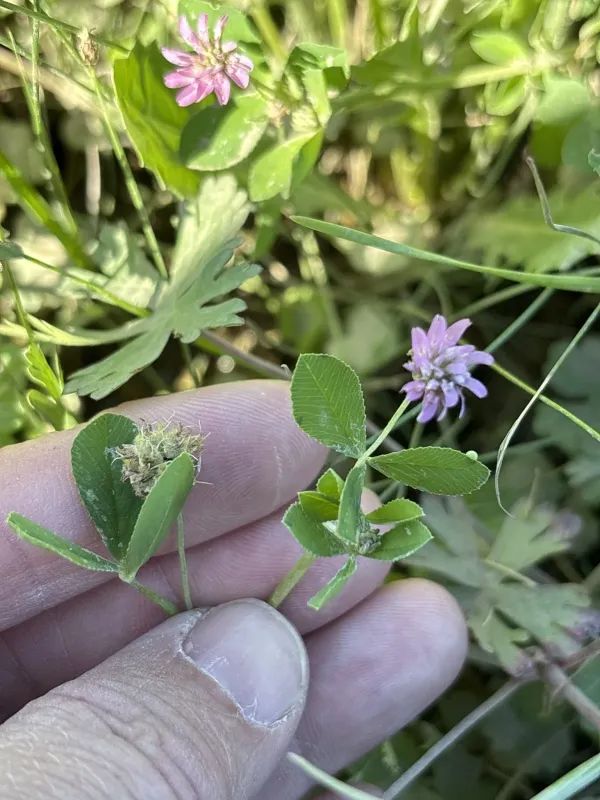
Description
Sowing dates
Persian clover is an annual legume typically sown in early spring as soon as the soil temperatures reach 5–8 degrees Celsius, as the plant is cold-tolerant in its early stages.
In warmer climates, autumn or winter sowing is possible, allowing the crop to establish a root system and utilize winter moisture for vigorous growth in the spring.
Seeds should be planted at a shallow depth of 1–2 centimeters, ensuring good soil contact since the seeds are very small and can easily dry out if buried too deep.
Seeding rates usually range from 12 to 15 kg per hectare, depending on whether the clover is grown as a pure stand or in a mixture with annual grasses for forage.
Preparing a smooth, firm seedbed is essential for achieving uniform emergence, which is critical for consistent biomass production throughout the growing season.
Growing requirements
Persian clover is highly valued for its water-loving nature and can thrive in areas with high soil moisture, even tolerating brief periods of waterlogging better than other clovers.
The ideal soil for this crop is a fertile loam or clay soil rich in organic matter. It is notable for its ability to grow in soils that are slightly saline.
The crop prefers a neutral to slightly alkaline pH; growth is significantly restricted in highly acidic soils, which often require liming to achieve optimal yields.
It requires high light intensity for proper development, so it is best grown as a monoculture or with companion crops that do not provide excessive shade.
While it prefers moderate temperatures, it is sensitive to intense heat and dry winds, which can quickly dehydrate the plants and halt their active growth cycle.
Yield
Under optimal conditions, including sufficient moisture, the biomass yield of Persian clover can range from 30 to 40 tons of fresh weight per hectare per season.
The nutritional profile of the crop is excellent, featuring high levels of crude protein and highly digestible fibers, making it an ideal choice for ruminant nutrition.
Its ability to regrow rapidly after mowing or grazing makes it a highly efficient component of seasonal forage production systems, allowing for multiple cuts per year.
Seed production is generally reliable, which allows producers to collect their own seeds for the following season, contributing to overall farm sustainability.
The soft texture of the stems and leaves ensures high palatability for livestock, resulting in better intake and improved performance in both dairy and beef production.
Main diseases and pests
The crop is susceptible to fungal diseases such as powdery mildew and anthracnose, particularly in humid or overcrowded conditions where airflow is restricted.
Root rot diseases can occur if the soil remains poorly drained for too long, leading to a breakdown of the root system and plant stunting or premature death.
Clover root curculios and other beetles are significant pests that damage the root system, potentially reducing the plant's nitrogen-fixing capabilities.
Foliage-feeding insects, including armyworms or moth larvae, can cause rapid defoliation, leading to significant biomass loss if not managed in time.
Integrated pest management strategies, such as crop rotation, strategic mowing, and maintaining proper soil drainage, are the most effective ways to minimize these threats.
Harvesting
Harvesting for silage or hay should occur during the early-to-mid flowering stage to maximize the balance between total biomass volume and nutrient concentration.
If producing hay, quick drying is necessary to preserve the nutrient-dense leaves and prevent the loss of quality due to leaf shattering or overexposure to moisture.
For grazing, livestock should be introduced to the field before flowering to prevent the plants from becoming too stemmy and to improve overall digestibility for the animals.
Delaying the harvest until the late seed-set phase is generally discouraged, as the stems become lignified, significantly reducing the forage quality for livestock.
Post-harvest management involves clearing the field of debris, which promotes better soil structure and prepares the land for follow-up tillage or natural reseeding.