

Reference · Crops
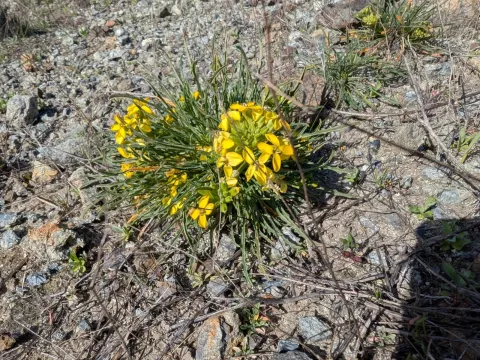
Wallflower
Erysimum L.
Wallflower (Erysimum) belongs to the Brassicaceae family and is valued for its pharmacological properties. Sowing is typically performed in early spring as soon as soil temperatures reach at least 5–8°C to ensure stable germination.
10
items
What the section contains
 Treacle mustard
Erysimum cheiranthoides L.
7 products
Treacle mustard
Erysimum cheiranthoides L.
7 products
 Erysimum bicolor
 (Hornem.) DC.
Erysimum heritieri
Erysimum heritieri Kuntze
Erysimum heritieri
Erysimum heritieri Kuntze var. heritieri
Erysimum bicolor
Erysimum bicolor (Hornem.) DC.
Erysimum heritieri
Erysimum heritieri Kuntze
Erysimum heritieri
Erysimum heritieri Kuntze var. heritieri
 Erysimum hieraciifolium
 L.
Erysimum hieraciifolium
Erysimum hieraciifolium L.
 Siberian Wallflower
Erysimum x allionii hort.
Siberian Wallflower
Erysimum x allionii hort.
 Spreading wallflower
Erysimum diffusum Ehrh.
Spreading wallflower
Erysimum diffusum Ehrh.
 Wallflower
Erysimum cheiri (L.) Crantz
Wallflower
Erysimum cheiri (L.) Crantz
 Wallflower (Erysimum linifolium)
Erysimum linifolium (Pers.) J. Gay
Wallflower (Erysimum linifolium)
Erysimum linifolium (Pers.) J. Gay
 Western wallflower
Erysimum asperum (Nutt.) DC.
Western wallflower
Erysimum asperum (Nutt.) DC.
Marketplace
Products in this section · 12


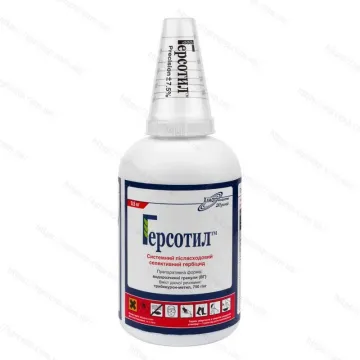


Gerositol w.r.g., (tribenuron-methyl, 750 g/kg)
Sunrise Agrochemical Co., Ltd.
Herbicides
0
0
2 offers
22.19 €за кг
Buy

Trifluralin 480 g/L, herbicide
F.A.GAN Chemical Manufacturers Ltd. Israel, member
Herbicides
0
0
8 offers
8.74 €per 1 l
Buy

Wallflower
For biennial or winter-hardy varieties, late summer sowing is preferred. This allows the plants to establish a robust rosette of leaves before winter, which promotes early and uniform flowering in the following season.
The seeds are small and should be sown at a depth of 1–2 cm. Row planting with a spacing of 30–45 cm is standard, facilitating efficient weed management and maintaining airflow, which reduces disease pressure.
Firming the soil after sowing is essential to ensure good seed-to-soil contact. This practice promotes moisture retention and accelerates the uniform emergence of seedlings across the entire field.
The seed rate is usually adjusted based on the cultivar and the desired density of the stand, generally ranging from 3 to 5 kg per hectare for optimal production of vegetative biomass.
Wallflowers thrive in sunny, open locations. Access to direct sunlight is crucial for the development of vegetative biomass and the accumulation of secondary metabolites, such as cardiac glycosides.
The plant performs best in light, sandy-loam or well-drained loamy soils. It has a high tolerance for drought but requires adequate moisture during the early establishment phase and the start of the flowering stage.
Soil pH should be neutral to slightly alkaline for optimal nutrient uptake. Acidic soils may inhibit growth, and liming the field prior to planting is recommended if the soil test indicates a low pH level.
Good drainage is paramount; the plant is sensitive to waterlogging. Planting in low-lying areas or heavy clay soils prone to compaction should be avoided to prevent root diseases and stunted growth.
A balanced fertilization strategy, focusing on phosphorus and potassium, improves winter hardiness and product quality. Nitrogen should be managed carefully to avoid excessive leafy growth at the expense of active compounds.
The average yield of Erysimum typically ranges from 1.5 to 3.0 tons of dry raw material per hectare. Productivity is heavily dependent on soil fertility, moisture availability, and proper harvest timing.
The highest concentration of biologically active compounds is found at the onset of mass flowering. Timely harvesting at this stage is essential to maximize the yield of high-quality medicinal material.
Mechanical cultivation between rows is recommended to control weeds and improve soil aeration. This increases root health and efficiency, contributing to more vigorous plant development and higher biomass accumulation.
When grown for seed, yields can reach 400–600 kg/ha. Close monitoring of seed maturity is required as the pods are prone to shattering if harvesting is delayed until they are fully dry.
Regular selection of high-yielding plant lines and the use of healthy, certified seeds are critical to maintaining stable productivity and ensuring consistent quality in industrial farming.
Cruciferous flea beetles are the most significant pests for Erysimum, especially during the seedling stage. Early intervention with suitable insecticides or protective covers is often necessary to prevent severe losses.
Fungal diseases like powdery mildew and Alternaria blight can affect the crop, particularly under conditions of high humidity and poor ventilation. Proper spacing and crop rotation help mitigate these risks significantly.
Aphids can colonize the flowering stalks, leading to stunted growth and damaged flower buds. Integrated pest management, focusing on early detection and targeted treatments, is essential for maintaining crop quality.
Root rot is typically associated with poor drainage or overwatering. Maintaining soil health and strictly avoiding fields previously occupied by other Brassicaceae crops helps reduce the incidence of these soil-borne pathogens.
In the context of producing medicinal raw materials, the use of pesticides must be strictly regulated. Pre-harvest intervals must be adhered to, and preference should be given to non-chemical preventative methods.
Harvesting is performed during the peak flowering stage. The aerial parts of the plants are cut about 15 cm above the ground to ensure the collection of clean, high-quality material free from soil debris.
Immediate processing is necessary after cutting. Leaving the cut material in windrows for too long can trigger fermentation and degradation of active chemical compounds due to heat accumulation.
Drying is best achieved in dedicated facilities at temperatures not exceeding 45–50°C to preserve heat-sensitive substances. Shade drying with active airflow is an alternative, provided the humidity is low.
The drying process is considered complete when the stems snap cleanly without bending. This indicates the moisture content has reached the appropriate level (usually below 12%) for stable long-term storage.
Post-harvest storage should take place in dry, ventilated, and dark areas. Protecting the product from moisture and pests is crucial to maintaining its medicinal integrity until it is processed or sold.