
Western wallflower
Erysimum asperum (Nutt.) DC.
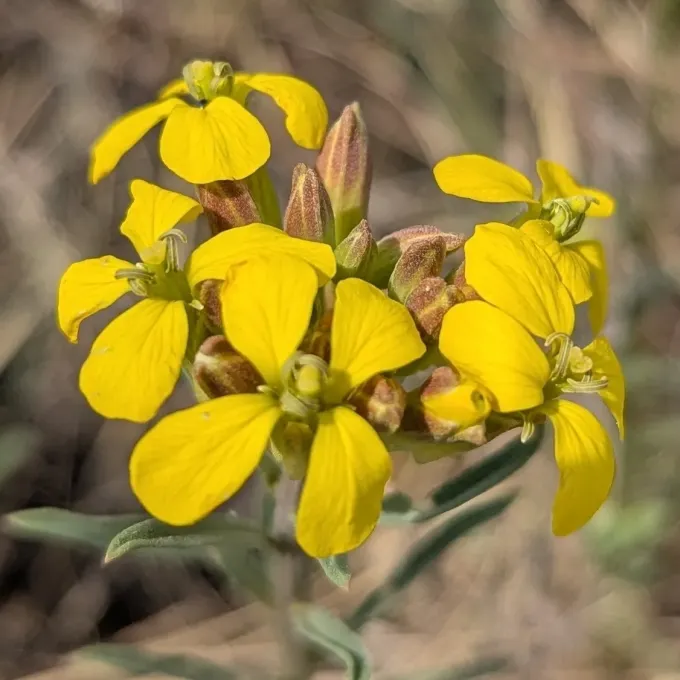
Description
Sowing dates
Sowing of Erysimum asperum is typically carried out in the spring when soil temperatures reach 6–8 degrees Celsius. Early spring is considered the optimal time, allowing seeds to utilize winter moisture for uniform germination.
For proper development, it is recommended to plant seeds at a shallow depth, not exceeding 1–2 centimeters. Excessive burial can negatively impact germination energy because the seeds of this species are relatively small.
The seeding rate is calculated based on the intended use: whether for dense forage stands or seed production. Ensuring even distribution across the area is crucial to reduce intraspecific competition.
In regions with milder climates, late autumn sowing is possible, allowing for earlier flowering in the following season. This approach requires careful soil preparation in the fall to mitigate the risk of winterkill due to temperature fluctuations.
After sowing, rolling the field is recommended to improve seed-to-soil contact and ensure capillary moisture movement to the germinating seeds.
Growing requirements
Erysimum asperum belongs to the Brassicaceae family and exhibits significant ecological plasticity. It thrives in various soil types, preferring well-drained loams or sandy soils.
The crop demonstrates high drought tolerance, making it suitable for cultivation in steppe and forest-steppe zones. The plant tolerates direct sunlight well and responds poorly to prolonged soil waterlogging.
Optimal pH levels for successful growth range from slightly acidic to neutral. The application of mineral fertilizers, particularly phosphorus and potassium, significantly stimulates vegetative growth and enhances resistance to environmental stressors.
During its growth cycle, the plant develops a robust taproot system that enables it to access moisture from deeper soil layers, making it a promising candidate for degraded land reclamation.
Sufficient spacing is a key developmental factor, as Erysimum asperum can be suppressed by aggressive weeds during its rosette phase.
Yield
The green mass yield of Western wallflower depends on the site's fertility and precipitation levels during the first half of the growing season. Under favorable conditions, it is possible to obtain two cuts per season.
Seed productivity is a focus of selection efforts, as the seeds contain valuable fatty oils. Harvesting is performed during the full maturity phase, when the pods turn brownish.
Average seed yield under intensive management can reach significant levels, making this crop economically viable for niche production. Stability of harvest depends on preventing seed shattering during delayed harvesting.
The quality of the crop is directly correlated with the timing of the cut. Early harvesting for forage preserves the maximum concentration of protein in the leaves and stems.
Cultivation efficiency increases when using improved varieties with a high degree of stem uniformity, which facilitates the use of standard harvesting machinery.
Main diseases and pests
The primary threats to Erysimum asperum are pests common to all cruciferous crops. The most dangerous pest is the flea beetle, which can destroy seedlings within the first few days of life.
The plant can be attacked by the pollen beetle during the budding phase, which leads to a substantial reduction in seed yield. Crop rotation and maintaining spatial isolation from other brassica crops are recommended to control pest populations.
Among fungal diseases, clubroot of crucifers can occur on waterlogged areas with high acidity. Prevention includes soil liming and maintaining an optimal water regime.
In dense stands, powdery mildew may develop, reducing the photosynthetic activity of the leaves. Fungicide treatment should only be applied if the economic threshold of damage is exceeded.
Effective weed control plays a vital role in protection, as weeds act as reservoirs for harmful insects and vectors for viral infections.