
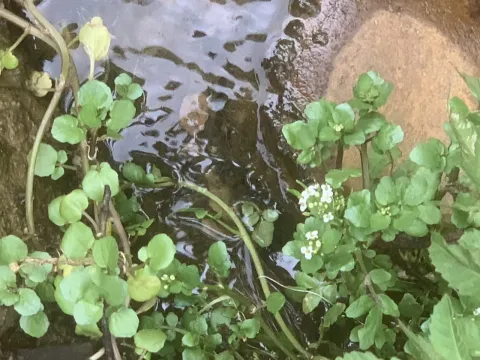
Watercress
Nasturtium
Watercress (Nasturtium officinale) is a perennial plant that requires specific environmental conditions for sowing. The seeds are very small, so they should be sown on the surface without being buried, ensuring high humidity for successful germination.
What the section contains


Watercress
In its natural habitat, watercress seeds germinate in flowing water or on wet soil throughout the growing season. In controlled environments, sowing is often done in greenhouses or specialized trays with a constant water supply, starting in early spring.
To accelerate germination, seeds can be pre-soaked in water, but it is important to maintain a clean environment to avoid mold development during the sprouting stage. The optimal temperature for emergence is 15–20 degrees Celsius.
In commercial cultivation, both direct seeding and transplanting seedlings into flowing water channels are practiced. This allows for more efficient use of seed material.
The timing for outdoor sowing depends on stable weather conditions, as the crop is sensitive to severe frost, despite its preference for cool water.
The primary requirement for successful watercress cultivation is the availability of clean, flowing water rich in minerals. The plant belongs to the Brassicaceae family and is biologically adapted to a semi-aquatic lifestyle.
The soil or substrate should have a slightly acidic or neutral pH, be rich in organic matter, and be free of heavy metals. Watercress actively absorbs micronutrients from the environment, making water purity a critical factor.
The crop prefers bright light, but in hot summer months, it requires light shading to avoid stress and early flowering, which negatively affects the flavor and texture of the leaves.
Temperature must be moderate. Ideal growth is observed at water and air temperatures between 10 and 18 degrees Celsius. Excessively high temperatures trigger stem elongation at the expense of leaf mass.
- Continuous water flow to prevent stagnation and oxygen deficiency.
- Maintaining high air humidity in greenhouse environments.
- Regular monitoring of nitrate and mineral levels in the nutrient solution.
The yield of watercress directly depends on planting density and the intensity of water exchange in the cultivation system. With proper management, the crop provides multiple harvests in a single growing season.
The first commercial harvest is usually possible 40–60 days after emergence. The plant regenerates quickly after partial stem pruning, which supports a continuous production cycle.
Intensive cultivation technologies in hydroponic systems allow for yields of up to 5–8 kg of commercial produce per square meter per full growth cycle.
To maintain high yields, it is necessary to regularly thin the plantings and remove overgrown, woody stems that reduce the marketability of the product.
Preventing flowering is a crucial factor: as soon as the plant bolts, leaf growth slows down and the taste becomes bitter, rendering the product unsuitable for market.
The main threats to watercress are various rots that develop in stagnant water and poor aeration conditions. Powdery mildew can also affect leaves in high humidity without proper ventilation.
Among pests, flea beetles and aphids are the most common, capable of quickly destroying tender leaves. Since watercress is consumed fresh, pesticide use is strictly limited or prohibited.
Biological control methods, such as using beneficial insects or bio-preparations, are prioritized in the agronomy of this crop. Water purity also helps prevent the development of mosquito larvae and other water-borne pests.
Slugs can cause serious damage to young plantings, especially in outdoor settings or greenhouses with high soil moisture around the trays.
Viral diseases can be spread by insect pests, making pest population control and the use of healthy seed material the foundation of disease prevention.
Watercress harvesting is performed by carefully cutting young shoots with a sharp knife or scissors. It is important not to damage the root system to allow the plant to continue growing.
The best time for harvesting is in the morning, when plant tissues contain maximum moisture, ensuring better shelf life and market appearance during transport.
Harvested greens must be immediately cooled and packed in perforated bags or containers. Watercress wilts very quickly at room temperature, so cold storage is mandatory.
Transportation must be carried out under strict temperature conditions (around 1–4 degrees Celsius) and high humidity to prevent loss of turgor.
Crop quality is assessed by the bright green color of the leaves, absence of rot, lack of flower stalks, and an overall fresh appearance.