
Spreading wallflower
Erysimum diffusum Ehrh.
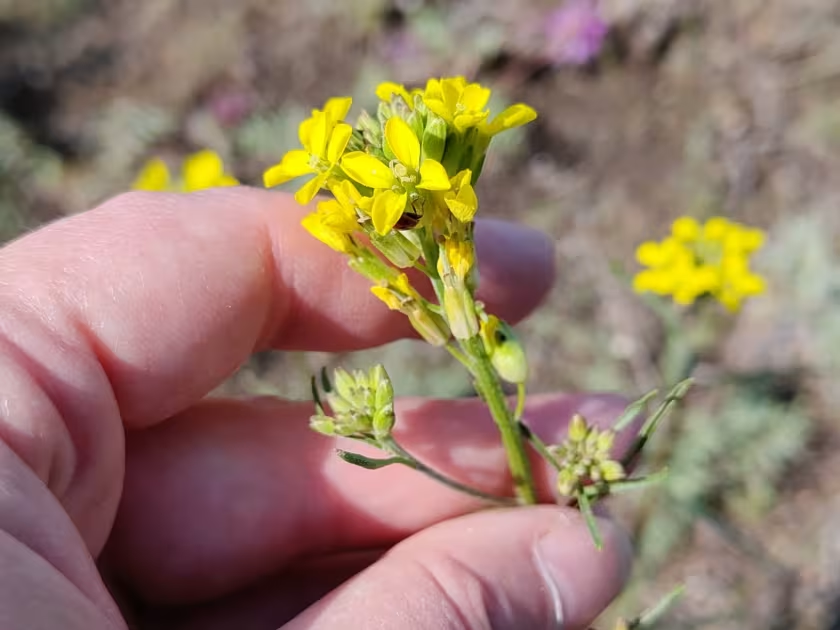
Description
Sowing dates
Erysimum diffusum is typically cultivated as a biennial, requiring careful planning of sowing dates to ensure proper development in the first year.
The seeds are best sown in late autumn or early spring, once the soil has warmed enough to facilitate germination, usually around 10–12 degrees Celsius.
A fine-textured seedbed is required, as the seeds are quite small and need shallow placement—no more than 2 centimeters deep—to sprout successfully.
Row spacing should be maintained between 30 and 45 centimeters, allowing for adequate air circulation and mechanical weeding between the rows.
Once the seedlings reach a height of 5–10 centimeters, thinning is recommended to establish an optimal plant density for maximizing vegetative growth.
Growing requirements
As a member of the Brassicaceae family, the spreading wallflower thrives in open, sunny locations with direct sunlight throughout the day.
The plant is highly adaptable to various soil types, but it prefers well-drained, sandy loam soils that prevent moisture stagnation during the rainy season.
It exhibits remarkable drought tolerance, making it an excellent candidate for regions with limited rainfall, though moderate watering during early growth helps.
Soil pH should ideally range between 6.0 and 7.5, as the plant does not perform well in highly acidic or poorly structured compacted soils.
During the vegetative phase, the plant builds the biological compounds required for its medicinal use, which are influenced by soil nutrient availability.
Yield
The commercial yield of Erysimum diffusum depends heavily on harvesting at the peak of the plant's biological maturity, specifically during full bloom.
Average biomass production varies by climate, typically resulting in significant amounts of dried material per hectare under proper agricultural conditions.
Success in production is measured not just by total weight, but by the concentration of cardiac glycosides extracted from the dried plant material.
Agricultural techniques such as controlled weeding and moisture management directly contribute to a consistent and high-quality pharmacological yield.
Post-harvest handling is critical, as improper storage can lead to the degradation of active chemical components, significantly reducing the final output value.
Main diseases and pests
The spreading wallflower is susceptible to common pests like flea beetles, which can cause severe defoliation during the early stages of plant growth.
Fungal diseases, including clubroot and powdery mildew, may occur if the soil remains waterlogged or if plants are sown too densely in humid climates.
Aphids often target the developing flower buds, necessitating careful monitoring to protect the harvestable parts of the plant from infestation.
Effective pest management involves integrated methods, including crop rotation and the removal of host weeds from surrounding field margins.
- Rotate crops to prevent soil-borne pathogen buildup.
- Use physical barriers for young plants against pests.
- Ensure adequate spacing for humidity control.
Harvesting
Harvesting should coincide with the peak flowering period, as this is when the concentration of medicinal compounds is at its maximum.
The entire above-ground portion of the plant is typically harvested, ensuring that the stalks are clean and free from soil contamination.
Drying must be initiated promptly after harvest, preferably in a temperature-controlled environment not exceeding 45 degrees Celsius to preserve efficacy.
Properly dried material should retain its color and potency, characterized by a specific chemical profile that is monitored during quality control.
Final storage involves placing the processed raw material in moisture-resistant containers, away from direct sunlight, to maintain stable chemical activity.