
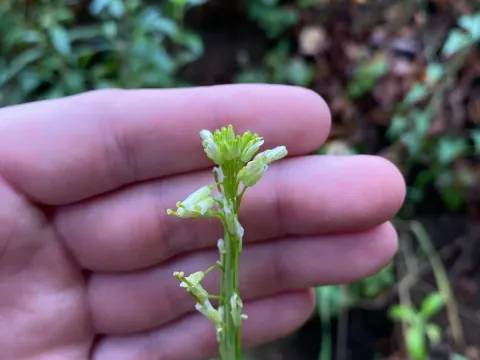
Tower mustard
Turritis
Tower mustard (Turritis) is a botanical genus within the Brassicaceae family, typically represented by biennial herbs that possess high environmental adaptability.
What the section contains


Tower mustard
The optimal sowing time is during the autumn, which allows the seeds to undergo natural stratification in the soil, a process crucial for uniform germination in the spring.
When spring sowing is unavoidable, seeds must be artificially stratified by keeping them in a cold, moist environment for several weeks to mimic natural winter conditions.
Seeds should be sown shallowly, ideally at a depth of 0.5 to 1 cm. Because they are tiny, ensuring good seed-to-soil contact is essential for rapid emergence.
Proper spacing between plants is required to allow for adequate ventilation and to prevent the development of moisture-related issues during the growth cycle.
This crop thrives in well-drained soils, preferring sandy loams or loamy soil types that maintain consistent moisture without becoming waterlogged.
Tower mustard shows remarkable winter hardiness, allowing it to survive frost in temperate climates without requiring any form of protective cover.
Full sun exposure is a primary requirement for this species. Insufficient light levels often result in weak, elongated stems that are prone to lodging.
The species is generally tolerant of various soil pH levels, but it performs optimally in neutral to slightly alkaline conditions where nutrient availability is best.
While the plant is hardy, it benefits from balanced phosphorus and potassium fertilization, which helps build strong structural integrity before the flowering stage.
The most common pests for Tower mustard include flea beetles, which can cause significant damage to the cotyledons and early foliage of young seedlings.
Fungal pathogens such as powdery mildew may develop if the planting density is too high, leading to poor air circulation and creating a microclimate suitable for fungi.
Integrated pest management strategies should focus on crop rotation, ensuring that the ground is not used for other Brassicaceae family members for several consecutive years.
Regular monitoring for symptoms of disease or infestation is essential, as early intervention can prevent the need for broad-spectrum chemical applications.
- Monitor leaf surface for discoloration.
- Ensure adequate row spacing.
- Avoid nitrogen excess to minimize attraction for pests.
Harvesting usually occurs once the pods begin to dry and change color from green to a straw-yellow shade, indicating maturity.
It is important to harvest before the pods naturally dehisce and release their seeds, which is a common occurrence in many species of the Brassicaceae family.
Mechanical harvesting requires careful adjustment of combine settings to minimize seed shattering loss while ensuring the cleaning mechanism effectively removes debris.
After collection, the seeds should be dried in well-ventilated areas to reduce moisture content to safe storage levels, preventing mold and spoilage during long-term storage.
Proper cleaning and sorting are the final steps to ensure that only high-quality, viable seeds remain for future planting or processing purposes.