
Warty Cabbage
Bunias erucago
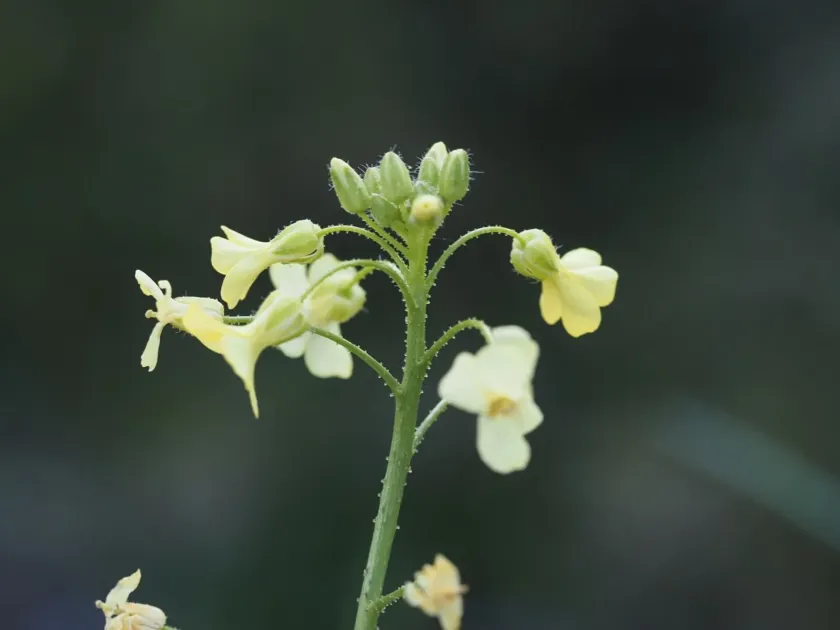
Description
Sowing dates
Warty Cabbage is typically sown either in early autumn or early spring, depending on the climatic zone and the intended use of the biomass.
Autumn planting is preferred in areas with mild winters, allowing the plant to establish a deep root system before the onset of the next growing season.
For spring sowing, the soil temperature should be at least 5 degrees Celsius to ensure steady germination and initial development of the seedling.
Seeds are usually sown at a shallow depth of 1 to 2 centimeters, as they require sufficient contact with soil moisture to break dormancy effectively.
Proper spacing between rows is essential to facilitate mechanical weeding and ensure optimal exposure to sunlight during the vegetative phase.
Growing requirements
As a member of the Brassicaceae family, Bunias erucago is known for its ability to thrive in various soil types, particularly light and well-drained ones.
The plant is highly adaptable to Mediterranean and temperate climates, showing significant resilience during periods of heat and limited precipitation.
It prefers sunny environments and can struggle with productivity if planted in areas with excessive shade or high levels of soil compaction.
Fertilization regimes for Warty Cabbage should focus on providing adequate nitrogen in the early stages to promote lush leaf development.
Its deep taproot allows the plant to access water from lower soil profiles, making it a reliable crop even in drought-prone agricultural regions.
Main diseases and pests
The most common pests affecting this crop include crucifer flea beetles, which primarily target young seedlings shortly after emergence.
Aphid infestations can occur during the flowering stage, potentially reducing the total seed yield and vigor of the plant for the following season.
Fungal pathogens such as white rust or downy mildew can become problematic in damp conditions, necessitating proper field drainage and airflow.
Integrated pest management strategies are recommended, including the use of trap crops and ensuring proper rotation with non-brassica species.
Monitoring for soil-borne pathogens is also essential to prevent the spread of diseases like clubroot, which can survive in the soil for years.
Harvesting
Harvesting for forage should occur during the pre-flowering stage, when the nutritional quality and biomass volume are at their peak.
For seed production, harvesting must be timed carefully to minimize losses, as the pods are prone to shattering when fully dry.
Mechanical harvesting equipment should be calibrated to handle the specific seed size to ensure minimal damage and high purity of the harvest.
Immediate post-harvest processing, including cleaning and drying, is critical to prevent mold development and ensure long-term stability.
The remains of the crop residue should be incorporated back into the soil or removed, depending on the soil fertility management plan.