
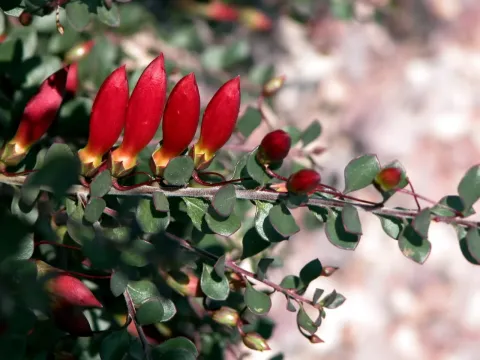
Eremophila
Eremophila
Eremophila is a diverse genus of flowering plants within the Scrophulariaceae family, native primarily to the arid regions of Australia. The name itself reflects the plant's natural habitat, as it translates from Greek to mean desert-loving.
What the section contains
 Emu bush
Eremophila longifolia
Emu bush
Eremophila longifolia
 Eremophila bignoniiflora
Eremophila bignoniiflora
Eremophila bignoniiflora
 Eremophila bowmanii
Eremophila bowmanii
Eremophila bowmanii
 Eremophila calorhabdos
Eremophila calorhabdos
Eremophila calorhabdos
 Eremophila ciliata
Eremophila ciliata
Eremophila ciliata
 Eremophila debilis
Eremophila debilis
Eremophila debilis
 Eremophila gilesii
Eremophila gilesii
Eremophila gilesii
 Eremophila laanii
Eremophila laanii
Eremophila laanii
 Eremophila latrobei
Eremophila latrobei
Eremophila latrobei
 Eremophila mitchellii
Eremophila mitchellii
Eremophila mitchellii
 Eremophila racemosa
Eremophila racemosa
Eremophila racemosa
 Eremophila splendens
Eremophila splendens
Eremophila splendens
 Eremophila sturtii
Eremophila sturtii
Eremophila sturtii
 Eremophila subfloccosa
Eremophila subfloccosa
Eremophila subfloccosa
Eremophila
These plants have evolved specialized mechanisms for water conservation, including pubescence on the leaves, which helps to reflect harsh sunlight and reduce transpiration rates in extreme heat conditions.
Successful cultivation of Eremophila requires sandy, well-draining soil types. Heavy, clay-based substrates often lead to root rot, which is the most common cause of plant loss for those unfamiliar with the specific needs of this genus.
Climate requirements involve high solar exposure and protection from freezing temperatures. While some species are hardier than others, the majority of the genus thrives in environments that replicate the intense light and warmth of the Australian outback.
From a utilitarian perspective, Eremophila serves as a vital component in xeriscaping. It is prized not only for its aesthetic appeal but also for its ability to stabilize soil in regions prone to degradation, acting as a natural protector against wind erosion.
The primary threats to Eremophila in non-native environments are fungal infections caused by humidity and stagnant water. Root rot pathogens are particularly aggressive and can destroy a specimen rapidly if soil drainage is inadequate.
Pests such as spider mites and aphids are common challenges. These insects thrive in dry, stagnant air, and they can significantly weaken the plant by feeding on its sap, particularly during the active growing season.
Management of these threats is best achieved through preventative maintenance rather than reactive chemical treatment. Improving air circulation and ensuring the planting medium dries out between waterings is essential.
If chemical intervention becomes necessary, contact insecticides should be applied carefully. It is important to target the undersides of the leaves where populations typically establish themselves during the early stages of an infestation.
Monitoring the plant for signs of chlorosis or wilting is critical. These symptoms often serve as early indicators of either overwatering or nutrient imbalances, allowing for prompt corrective action before structural damage occurs.