
Eremophila latrobei
Eremophila latrobei
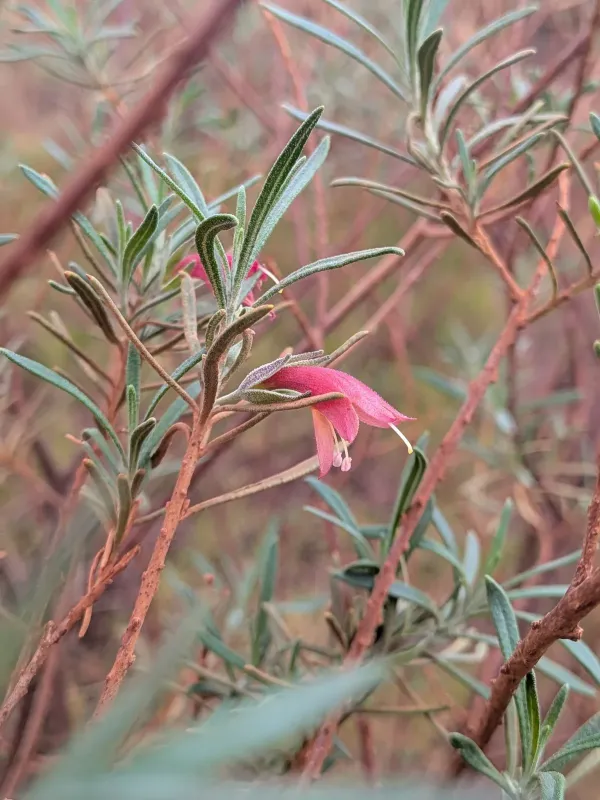
Description
Growing requirements
Eremophila latrobei, commonly known as the desert fuchsia, belongs to the Scrophulariaceae family. This woody perennial shrub is native to the arid interior regions of Australia, where it thrives in extreme environmental conditions.
For successful cultivation, the plant requires excellent drainage and low-nutrient, sandy soils. It is highly intolerant of waterlogging, which quickly causes root rot and sudden plant death. Choosing a site with a high gradient or raised beds is recommended.
The climate requirements for this species include full sun exposure and high heat tolerance. It is specifically adapted to long-term drought, meaning that natural precipitation patterns in its native habitat are sufficient once the plant is established.
Regarding agrotechnical practices, minimal intervention is the best approach. Fertilization should be kept to an absolute minimum, as excess nutrients can be detrimental to the health and natural form of the shrub.
The primary use of Eremophila latrobei is in xeriscaping and ecological restoration projects. Its ability to stabilize loose soil and its deep-red flowers make it a valuable asset for arid land landscaping and pollinator support.
Main diseases and pests
The most significant threats to Eremophila latrobei are moisture-related diseases, particularly Pythium and Phytophthora root rots. These are usually fatal and occur when drainage is inadequate or summer humidity is too high.
In terms of pests, scale insects and aphids may occasionally infest young terminal growth. Monitoring these insects is essential, especially in dense plantings where the airflow between the canopy might be restricted.
Fungal leaf spots can manifest under conditions of poor ventilation or high atmospheric moisture. Implementing a management strategy that ensures dry foliage and optimal sun penetration is the key to prevention.
In its native range, overgrazing by herbivores such as feral goats or kangaroos can severely impact young populations. When planted in gardens, physical protection might be necessary during the establishment phase.
General plant health is maintained by replicating desert conditions. Avoiding overhead irrigation and keeping the area around the base of the plant free from organic mulch is critical for preventing fungal infection.