
Eremophila bowmanii
Eremophila bowmanii
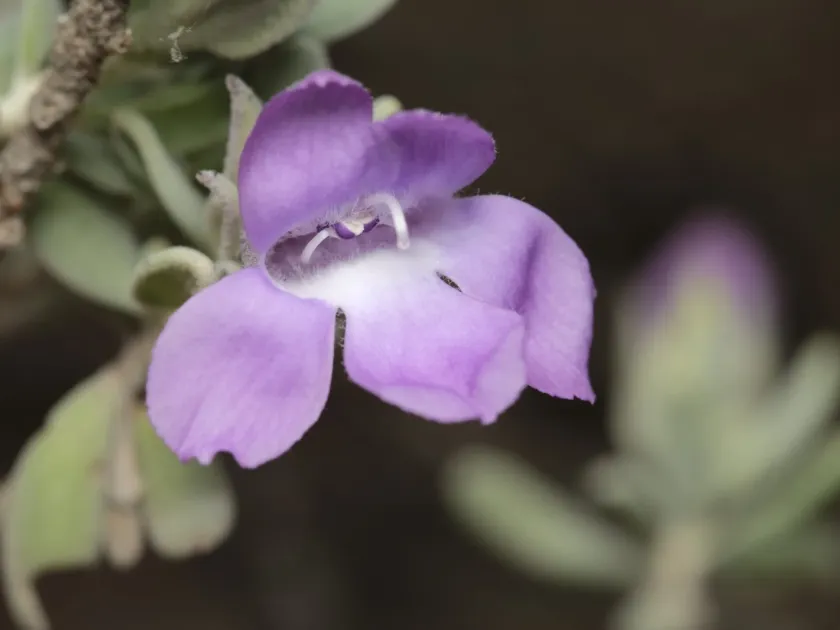
Description
Growing requirements
Eremophila bowmanii, commonly known as the silver emu bush, belongs to the Scrophulariaceae family. This species is endemic to the arid regions of Australia, where it has evolved to thrive in harsh, dry environments with minimal precipitation.
The plant is characterized by its stunning silver-grey foliage, which is covered in fine, dense hairs to reduce transpiration. The flowers, typically shades of blue to purple, appear throughout the growing season and add significant visual appeal to arid landscapes.
Cultivation requires full sun exposure and excellent drainage. The species is highly sensitive to root asphyxiation, making the choice of substrate vital; sandy or gritty soils with a neutral pH are essential for long-term survival.
Watering management is the most critical aspect of agrotechnics. During the establishment phase, supplemental water is needed, but once mature, the plant requires very little moisture and can tolerate extended periods of drought.
The plant is primarily used in xeriscaping and sustainable garden designs. Its ability to tolerate low-nutrient soils and high temperatures makes it an ideal choice for water-wise gardening in appropriate climates.
Main diseases and pests
The most significant threat to Eremophila bowmanii is fungal infection, particularly root rot, caused by waterlogged soil. Proper soil structure is the best defense against these pathogens, which are often fatal to the species.
High ambient humidity combined with stagnant air can lead to powdery mildew. Ensuring adequate spacing between plants allows for sufficient airflow, which is essential for maintaining a healthy foliage state.
Pests such as spider mites and scale insects can occasionally infest the plant. Early detection is important, as the plant's delicate hair-covered leaves can be damaged by overly harsh chemical treatments.
Gardeners should perform regular, light pruning to maintain plant shape and density. This practice not only improves the ornamental value but also ensures that the internal branches receive enough light and air.
Fertilizer application should be minimal or unnecessary, as the plant is naturally adapted to survive in infertile soils. Over-fertilization, especially with nitrogen, can lead to succulent growth that is more prone to pest attacks and structural failure.