
Eremophila sturtii
Eremophila sturtii
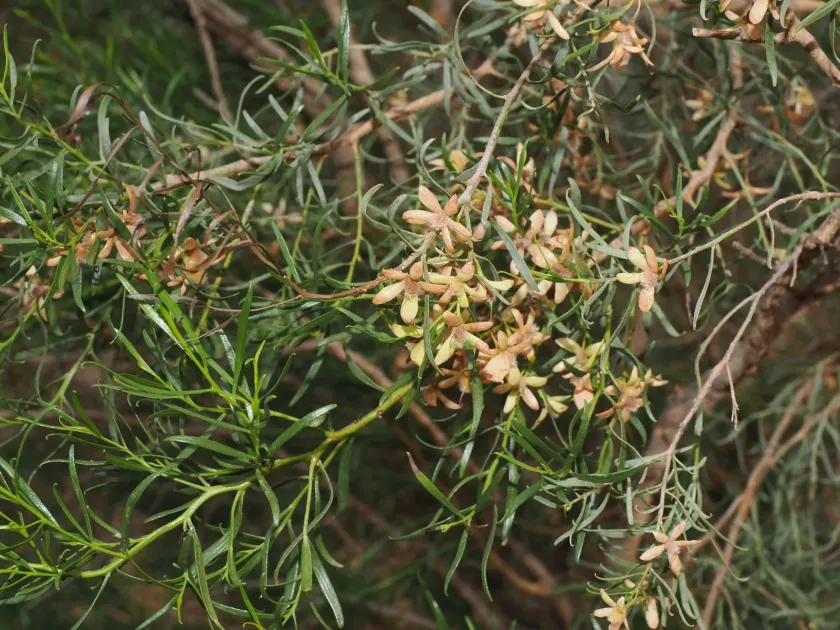
Description
Growing requirements
Eremophila sturtii, commonly known as Sturt's Eremophila, is a hardy perennial shrub belonging to the Scrophulariaceae family. It is native to the arid and semi-arid zones of Australia, where it has evolved to thrive in harsh environments.
The plant is characterized by its narrow, glandular leaves which serve as an adaptation to minimize water loss. It can grow up to 3 meters in height, providing a robust structure that is highly valued for erosion control in dryland landscapes.
Agricultural success with this species depends heavily on soil drainage. It prefers sandy or loamy soils and will fail in heavy, waterlogged conditions. The site must be chosen with adequate slope or structure to prevent moisture accumulation.
The species is highly tolerant to heat and low soil fertility. It requires full sunlight exposure to maintain its vigor and promote the development of its characteristic flowers, which appear seasonally depending on moisture availability.
Management practices should prioritize minimal disturbance to the soil and water structure. Once established, the shrub requires very little maintenance, making it an excellent candidate for low-input agricultural or landscape systems in arid climates.
Main diseases and pests
Root rot caused by fungal pathogens is the primary threat to the longevity of Eremophila sturtii. This condition is almost exclusively linked to overwatering or poor drainage systems in the field.
Insect pests such as scale insects or aphids may occasionally infest new growth. While usually not fatal to a mature, healthy plant, heavy infestations may require mechanical pruning or the selective application of systemic insecticides.