
Eremophila gilesii
Eremophila gilesii
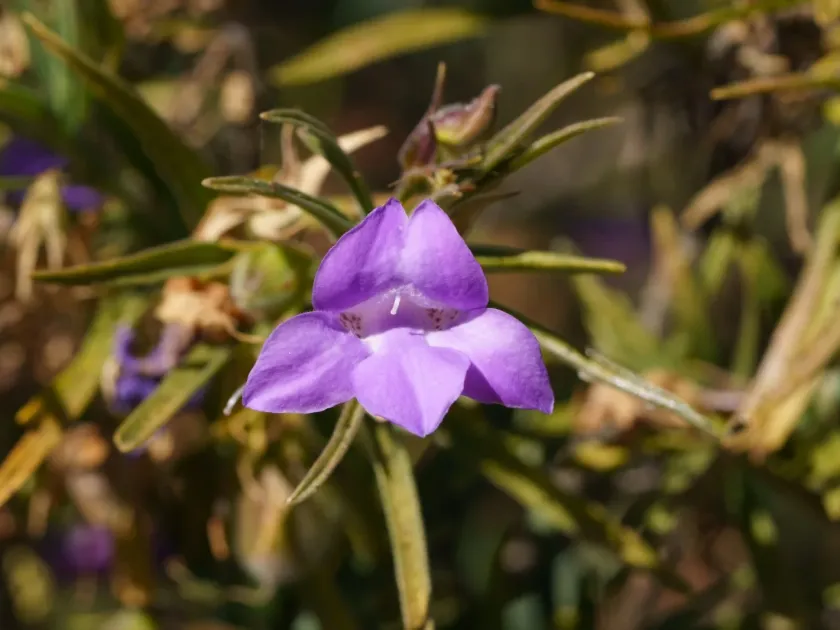
Description
Growing requirements
Eremophila gilesii is an evergreen shrub native to the arid regions of Australia, belonging to the Scrophulariaceae family. Known for its ability to thrive in harsh, desert-like conditions, it is a hallmark of xeriscaping and dry-climate gardening.
The plant features small, narrow, often hairy leaves that serve as a natural defense mechanism against water loss. Its distinctive tubular flowers, which bloom in shades ranging from light pink to deep purple, make it a visually striking specimen for any landscape.
Full sun exposure is a non-negotiable requirement for this species. To maintain its compact shape and promote healthy flowering, the shrub must be planted in an area that receives intense, direct sunlight throughout the majority of the day.
Soil structure is critical for Eremophila gilesii; it requires very well-draining, sandy, or rocky soil. The species is highly sensitive to moisture retention around its root system, which can rapidly lead to decline and plant loss in heavy, clay-based soils.
In terms of agricultural and horticultural utility, it serves as a low-maintenance, ornamental hedge or standalone plant. Once established, it requires little to no supplemental watering, making it highly efficient in environments with water scarcity.
Main diseases and pests
Fungal diseases related to high humidity represent the most significant threat to the health of Eremophila gilesii. Excessive ambient moisture can lead to foliage decay, so selecting a planting site with excellent airflow is essential for disease prevention.
Pests such as aphids and spider mites can occasionally affect the shrub, particularly during periods of extreme heat when the plant may be slightly stressed. Early identification and the use of targeted treatments are necessary to control these infestations.
Root rot is the most common pathology associated with poor horticultural practices. If the soil remains saturated for extended periods, the plant’s root system will lack the necessary oxygen, leading to rapid systemic failure.
To maintain plant health, avoid overhead irrigation systems that wet the leaves and stems. Applying a layer of inorganic mulch, such as crushed gravel or stone, around the base helps keep the crown dry and prevents soil pathogens from splashing onto the foliage.
Consistent monitoring of the shrub's appearance allows for early intervention. While the plant is inherently hardy and well-adapted to its native environment, human-managed landscapes often require extra vigilance regarding soil drainage and spacing.