
Eremophila ciliata
Eremophila ciliata
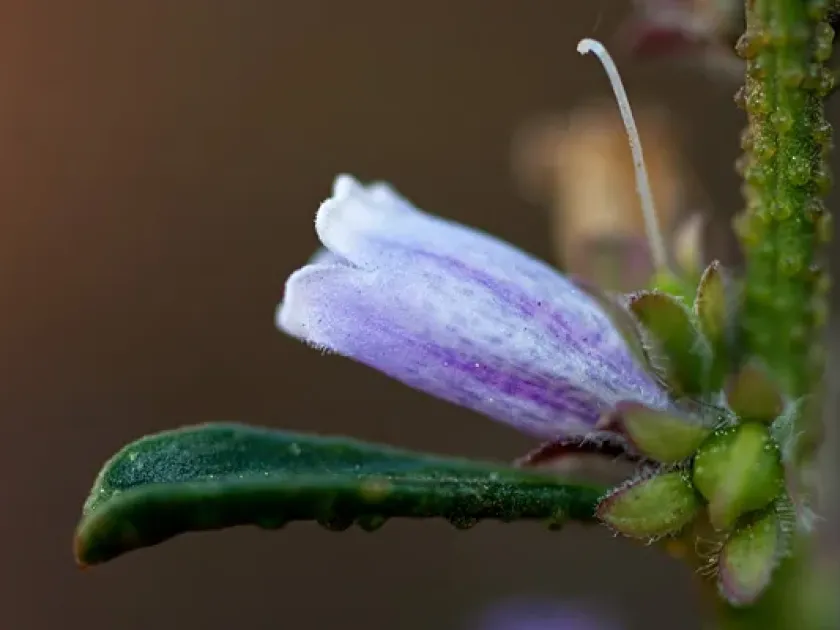
Description
Sowing dates
Eremophila ciliata belongs to the Scrophulariaceae family and is native to the arid regions of Australia. This plant has evolved to thrive in harsh environments, making it a subject of interest for water-wise landscaping and specialized horticulture.
Propagation is primarily achieved through stem cuttings. This method ensures the genetic consistency of the plant and is the preferred approach for nursery production due to the difficulties associated with seed germination.
Cuttings should be placed in a well-draining, sandy propagating mix. Proper sanitation and controlled humidity are critical during the rooting phase to prevent early-stage fungal outbreaks in the sensitive cuttings.
Once established, plants are typically transplanted during the spring to allow the root system to settle before the heat of summer. Proper spacing is necessary to ensure adequate airflow between individual specimens.
In natural settings, reproduction relies on specific environmental triggers, such as post-rainfall events. In an agronomic context, human intervention is necessary to provide the specific conditions required for successful multiplication.
Growing requirements
The plant requires full sun exposure to maintain its structural integrity and health. Shade-grown plants tend to become leggy and lose the compact growth habit that defines their aesthetic value.
Soil quality is paramount; Eremophila ciliata demands excellent drainage. Heavy soils should be amended with grit or sand to mimic the rocky, well-draining conditions of its native arid habitat.
The species is highly heat-tolerant but shows limited frost resistance. It is best suited for climates with long, hot summers and mild winters, making it ideal for xeriscaping in arid or semi-arid zones.
Water management is the most important aspect of cultivation. The plant is drought-tolerant, meaning it can survive dry spells; however, it is highly intolerant of waterlogged soil, which leads to immediate root decay.
Fertilization should be handled with caution. The plant is adapted to nutrient-poor soils, so excess fertilizers, particularly nitrogen-rich ones, can lead to structural weakness and increased susceptibility to pests.
Main diseases and pests
The most significant threat to the survival of the plant is root rot caused by stagnant water or poor drainage. This is a common failure point for gardeners unfamiliar with the specific needs of Eremophila species.
Pests such as aphids and spider mites can infest the foliage, particularly if the plant is stressed by environmental factors or poor airflow. Regular monitoring is essential to prevent these infestations from becoming widespread.
Powdery mildew can occur in environments with high ambient humidity or poor air circulation. This fungal condition requires treatment with appropriate fungicides and adjustments to the plant's surrounding microclimate.
To maintain a healthy crop, preventative measures such as pruning for air circulation and careful site selection are vital. Early detection of any yellowing or wilting is a key indicator of underlying stress or infection.
- Root rot caused by poor soil drainage
- Aphid infestations on terminal shoots
- Spider mite damage in hot, dry conditions
- Powdery mildew in humid or poorly ventilated areas