
Emu bush
Eremophila longifolia
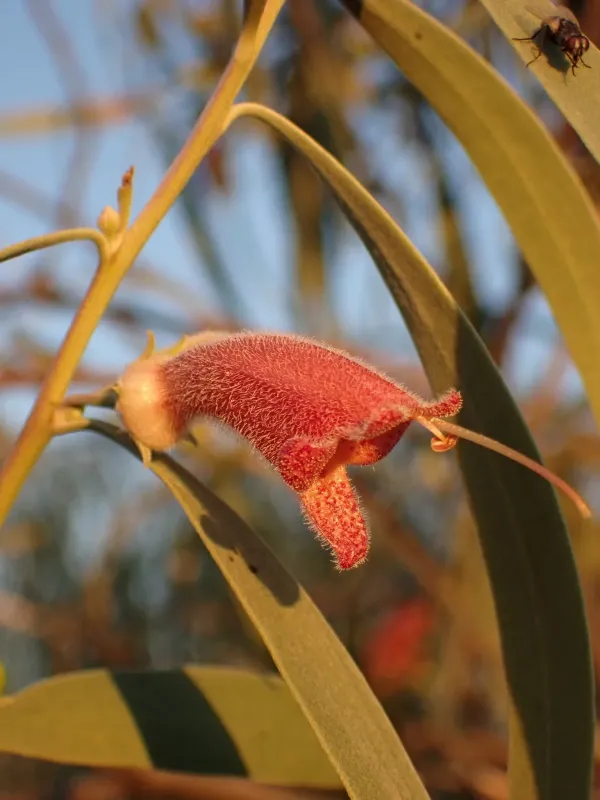
Description
Growing requirements
Eremophila longifolia, commonly known as the Long-leaved Emu Bush, belongs to the Scrophulariaceae family. It is a resilient evergreen shrub native to the arid and semi-arid regions of Australia, known for its ability to thrive in extremely harsh environments.
The plant grows best in well-drained soils, ranging from sandy loam to rocky substrates. It is essential to ensure that the site does not hold water, as the roots are highly susceptible to rot if they remain in saturated soil for extended periods.
Optimal growth is achieved in full sunlight. Eremophila longifolia requires high solar exposure to produce its characteristic tubular flowers, which are a major attraction for local pollinators and birds.
This species exhibits remarkable tolerance to salinity and high temperatures, making it an excellent candidate for xeriscaping and soil stabilization projects in regions suffering from drought or desertification.
Maintenance is relatively straightforward: once established, the plant requires minimal supplemental watering. Periodic pruning is beneficial to encourage a denser growth habit and prolong the flowering season throughout the year.
Main diseases and pests
The primary threat to Eremophila longifolia is root pathogens, which are typically triggered by improper soil drainage or over-irrigation. Maintaining a dry root environment is the most critical factor for long-term health.
The plant generally possesses high resistance to insect pests. While occasional infestations of sap-sucking insects may occur, they rarely cause significant damage to mature, healthy plants grown in optimal conditions.
Poor air circulation, especially in humid or confined environments, may lead to fungal leaf spots. Providing ample spacing between individual shrubs helps mitigate this risk by allowing foliage to dry rapidly.
Young seedlings are particularly vulnerable to browsing by mammals, necessitating protective measures such as fencing or tree guards until the plants have developed sufficient woody mass.
By following standard xeriscaping practices and avoiding over-nurturing with water and fertilizers, growers can effectively prevent almost all typical plant diseases associated with this robust Australian species.