
Eremophila laanii
Eremophila laanii
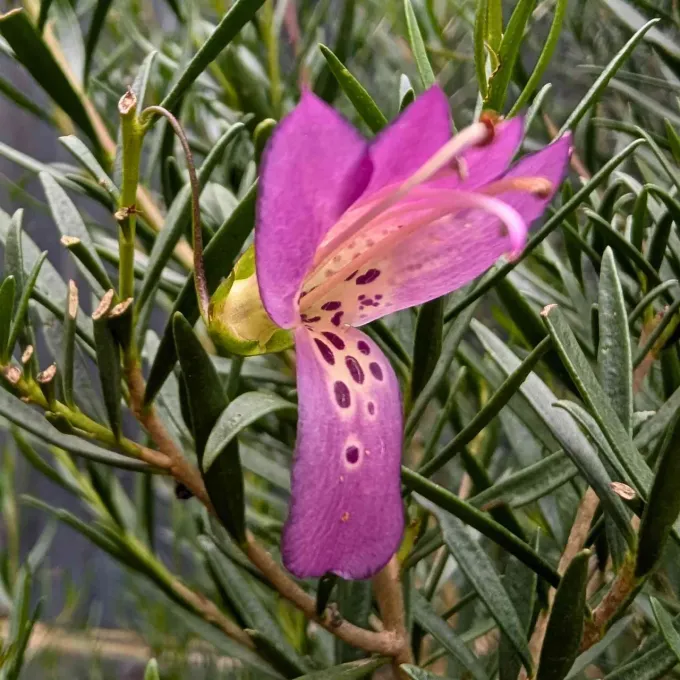
Description
Sowing dates
Propagation of Eremophila laanii in agricultural and horticultural settings is most successfully achieved through the use of semi-hardwood stem cuttings.
The optimal timing for taking cuttings is during late spring or early summer, aligning with the plant’s period of most vigorous vegetative growth.
Seed propagation is more complex, requiring stratification to overcome the natural dormancy caused by the seed’s tough and impermeable outer coat.
Sowing should be performed in containers using a gritty, free-draining substrate that mimics the nutrient-poor soils found in the plant's native habitat.
Young plants should be transplanted to their final location only after all danger of frost has passed and the soil has sufficiently warmed.
Growing requirements
Eremophila laanii is a member of the Scrophulariaceae family and is native to the arid and semi-arid regions of Western Australia.
The plant thrives under conditions of intense solar radiation and requires a site with full, unfiltered sunlight to maintain its structural integrity.
Soil requirements are strict: the medium must be highly porous, sandy, or gravelly to ensure that water drains away rapidly from the root zone.
It exhibits remarkable adaptation to heat stress and drought, making it a highly resilient species in regions with limited annual rainfall.
Irrigation management is critical, as the plant is highly susceptible to root rot if it is exposed to damp conditions for extended periods.
Main diseases and pests
Root rot, driven by waterlogged soil and poor drainage, remains the primary cause of plant failure and mortality in cultivated Eremophila laanii.
High relative humidity can trigger fungal issues such as powdery mildew, which necessitates fungicide application and improved air circulation.
Pests such as scale insects and mealybugs may target the plant, feeding on the sap of tender new growth and weakening the overall specimen.
Regular monitoring of the foliage and stems allows for early detection of these pests, which is essential for effective integrated pest management.
- Maintaining impeccable soil drainage.
- Promoting good airflow to prevent fungal colonization.
- Targeted treatment for sap-sucking insect infestations.