
Eremophila mitchellii
Eremophila mitchellii
Description
Growing requirements
Eremophila mitchellii, commonly known as false sandalwood, is a resilient shrub belonging to the Scrophulariaceae family. This species is native to the arid and semi-arid regions of Australia, where it has evolved to thrive in harsh, water-limited environments.
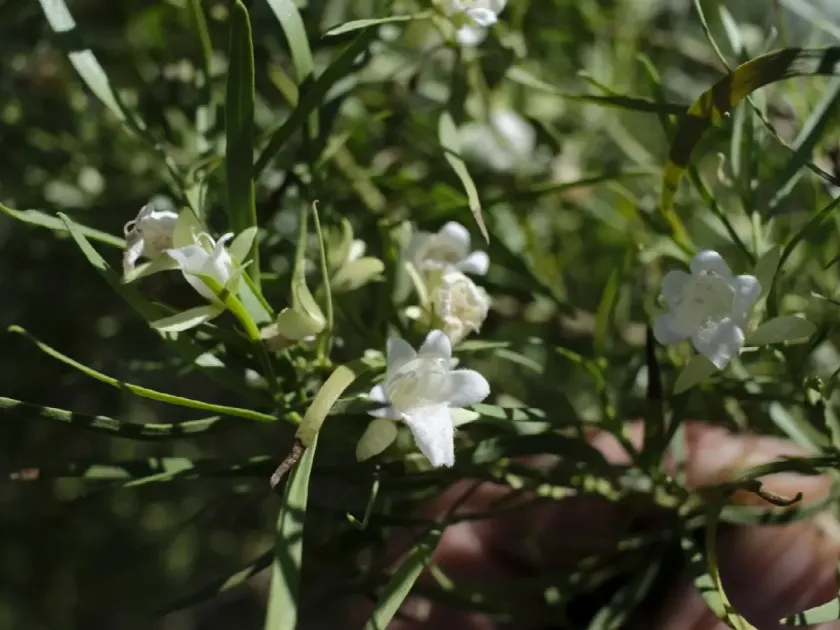
The botanical structure of the plant features dense, narrow leaves covered with a resinous, fragrant substance. This physiological trait minimizes transpiration, allowing the plant to survive extended droughts while maintaining its evergreen foliage throughout the year.
Optimal growth conditions require well-draining, sandy, or rocky soil types. It is essential to avoid heavy, clay-based soils that retain moisture, as the plant is highly susceptible to root decay if its root system is exposed to prolonged water saturation.
This shrub is highly photophilous and demands full sun exposure to flourish. While it is incredibly hardy against heat, it has limited tolerance to heavy frosts, making it unsuitable for colder agricultural zones without appropriate climate management.
In terms of agricultural and industrial use, the wood of Eremophila mitchellii is highly valued for its intense, sandalwood-like fragrance. It is often harvested for essential oils and aromatic wood products, while also serving as a critical component in land rehabilitation projects.
Main diseases and pests
The primary threats to this culture are fungal pathogens, specifically those causing root rot and stem decay. These issues usually manifest when the agricultural management fails to provide adequate drainage or when irrigation levels exceed the plant's natural requirements.
Insect pests, including scale insects and mites, can occasionally affect the vitality of the plant by feeding on the sap of young, succulent shoots. Integrated pest management strategies are recommended to maintain plant health and wood quality.