Trophy 90
Доу АгроСайенсіс С.А.С., Друзенхайм, Франція
Herbicides
0
0
·
4.3K
5 offers
0.33 €per 1 l
Buy
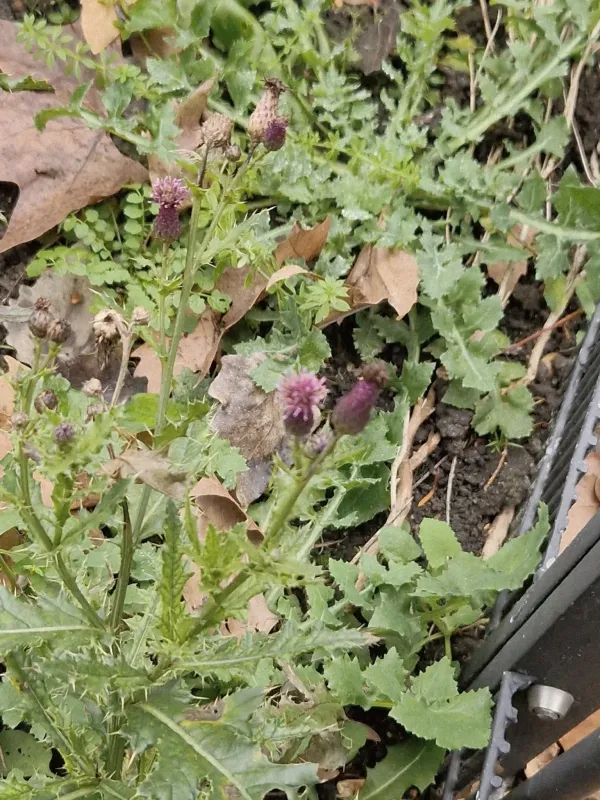
Creeping thistle is a perennial rhizomatous weed belonging to the Asteraceae family. Its stems reach a height of 40 to 150 cm, being upright, branched at the top, and smooth or slightly woolly.
The leaves are alternate, sessile, oblong-lanceolate, pinnately lobed, and equipped with sharp spines along the margins. The upper leaf surface is dark green, while the underside is grayish-felted.
It possesses a powerful root system consisting of vertical and horizontal roots that can penetrate the soil up to 3–5 meters deep, forming numerous buds for vegetative propagation.
Flowers are arranged in small heads 1.5–2 cm in diameter. The plant is dioecious: male flowers have a lilac-purple hue, while female flowers are lighter and typically larger.
The fruit is an achene with a pappus, which facilitates the mass distribution of seeds by the wind over long distances.
Creeping thistle is one of the most aggressive weeds worldwide. It prefers fertile, moist soils but easily adapts to various environmental conditions.
It is commonly found on arable lands, pastures, fallow fields, roadsides, and near human settlements. The weed rapidly colonizes new areas due to its extensive vegetative system.
In agricultural crops, thistle is particularly harmful in cereals, row crops, and perennial grasses.
It poses a significant threat in areas with high groundwater levels, where it actively displaces crop plants by outcompeting them for resources.
Field infestation occurs both through seeds and vegetatively, especially when tillage fragments the underground rhizomes, promoting new growth.
The primary damage caused by Creeping thistle is its massive consumption of soil moisture and nutrients, which significantly reduces the yields of cultivated plants.
Its deep root system suppresses crop root development, creating intense competition for space and essential nutrients during the early stages of crop growth.
The above-ground foliage creates excessive shading, inhibiting photosynthesis in crops and promoting the development of fungal diseases at the base of the plant canopy.
In hayfields, the weed reduces fodder quality because the sharp spines can injure the mouths and esophagi of livestock when consumed.
The presence of this weed complicates harvesting, increases machinery wear, and necessitates additional costs for grain cleaning and processing.
Effective management of Creeping thistle requires an integrated approach that combines proper agricultural practices and the use of systemic selective herbicides.
Agronomic measures include deep autumn plowing with soil inversion, which helps cut the root system and deplete the energy reserves stored in the roots.
Systematic cutting of the above-ground biomass during the rosette stage plays a crucial role in preventing nutrient accumulation in root crowns and weakening the plant.
Applying herbicides based on 2,4-D salts, dicamba, or sulfonylurea compounds is most effective during the thistle rosette stage, before active stem elongation.