Otaman
Wuxi Longbang Chemical & Industrial Co., Ltd.
Herbicides
0
0
·
4.6K
20 offers
2.3 €per 1 l
Buy
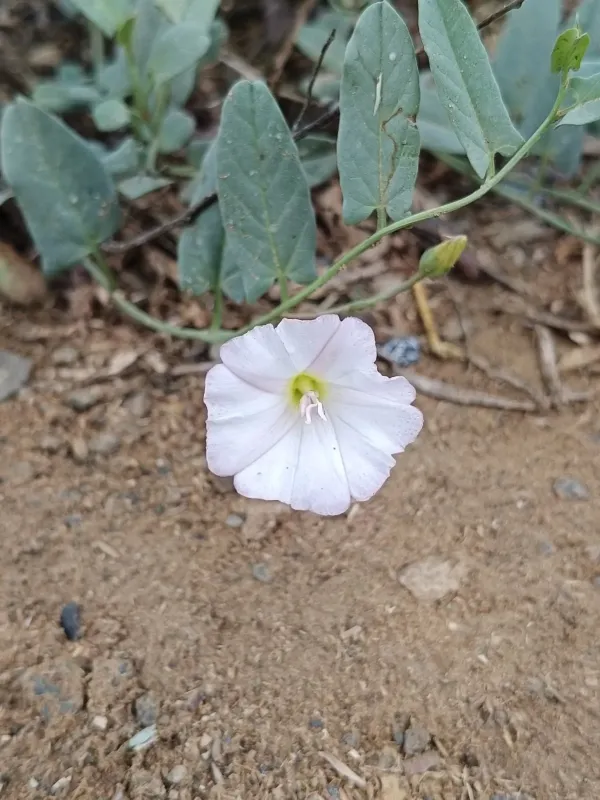
Field bindweed (Convolvulus arvensis) is a perennial, deep-rooted herbaceous weed belonging to the Convolvulaceae family, known for its extensive, resilient root system.
The stems are prostrate or twining, reaching significant lengths, and are capable of climbing up the stalks of various agricultural crops, causing lodging.
Leaves are alternate and vary from arrow-shaped to lance-shaped, providing efficient surface area for photosynthesis throughout the growing season.
The flowers are distinctively trumpet-shaped, usually white or pale pink, and open primarily during sunny, warm weather conditions.
Its complex root system can reach depths of several meters, storing vast energy reserves that allow the plant to regenerate repeatedly after top growth is removed.
Field bindweed is found globally in diverse environments, showing a preference for cultivated fields, orchards, roadsides, and disturbed soils.
It thrives in a variety of soil types and is particularly problematic in grain fields, vegetable crops, and vineyards where it competes for vital resources.
The plant is highly adaptable and can establish dense colonies in areas with poor crop rotation or minimal soil disturbance management.
In many regions, it is considered one of the most persistent perennial weeds, capable of surviving harsh climate conditions due to its deep taproot.
Seeds are highly persistent and can remain viable in the soil seed bank for decades, waiting for the right conditions to germinate and emerge.
The primary economic harm of field bindweed is the significant reduction in crop yield through direct competition for sunlight, water, and soil nutrients.
The vining habit of the plant tangles with crop stems, hindering mechanical harvesting and causing substantial losses during the harvest process.
Dense infestations can lead to high humidity around crop bases, which encourages the development of fungal and bacterial pathogens, damaging the plants.
Allelopathic properties of the root exudates can potentially inhibit the normal growth of young seedlings of desired crop species.
When present in harvested grain, bindweed seeds are difficult to remove and can contaminate the final product, affecting market quality.
Mechanical control focuses on repeated cultivation to exhaust the energy stored in the root system, preventing the plant from photosynthesizing efficiently.
Deep plowing can disrupt the root structure, although it is often insufficient on its own to eradicate deeply established mature infestations.
Chemical control involving systemic herbicides is most effective when applied during the flowering or active growth stages of the plant.
Translocation of herbicides to the deep root system is essential for long-term suppression, as surface-level treatments only provide temporary relief.