

Description
Mode of action
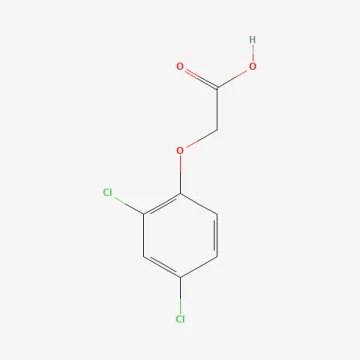
Active ingredients in the 2,4-D group belong to the phenoxy carboxylic acid chemical class. These are systemic auxin-type herbicides that mimic the activity of natural plant growth hormones.
Upon absorption by the leaves, the active substance is translocated through the vascular system to the growing points of the plant. This causes uncontrolled cell division, which rapidly exhausts the plant's metabolic energy.
The herbicide disrupts essential physiological processes, including photosynthesis and protein synthesis, leading to visible tissue deformation, twisting of stems, and eventual necrosis.
The group exhibits selective activity, being highly toxic to broadleaf plants while cereal crops are generally resistant due to their ability to enzymatically detoxify the chemical.
Environmental conditions play a critical role in efficacy; active growth of weeds and moderate temperatures are required for the chemical to be absorbed and translocated effectively.
What it targets
2,4-D based products are widely used for the control of a broad spectrum of annual and perennial broadleaf weeds in agricultural fields.
Commonly targeted species include lambsquarters, smartweeds, common ragweed, shepherd's purse, and various field cress species.
Perennial weeds like Canada thistle and sowthistle are effectively managed when the herbicide is applied during the early rosette stage of weed growth.
It is important to note that 2,4-D provides little to no control over grass weeds; therefore, it is often combined with other herbicides to broaden the control spectrum.
The level of control can vary based on the specific weed biotype, growth stage, and the herbicide formulation (amine salt vs. ester).
Rates and timing
In cereal crops such as wheat, barley, and rye, the application is typically scheduled during the tillering stage, before the jointing stage begins.
Application rates depend on the specific formulation, the target weed species, and local environmental conditions, which should be verified in the product label.
Ester formulations of 2,4-D are known for faster penetration and higher efficacy in cooler weather, though they require careful management due to higher volatility.
For corn, the most suitable timing for post-emergence application is usually when the crop is in the 3-5 leaf stage, to avoid potential injury to the crop itself.
Maintaining an appropriate spray volume, typically between 200 and 300 liters per hectare, ensures thorough coverage and optimal efficacy of the herbicide treatment.
Restrictions
A major concern when using 2,4-D is its potential for volatility and spray drift, which can cause significant damage to nearby susceptible crops like grapes, tomatoes, and sunflowers.
Strict drift management protocols must be followed, including avoiding application during high winds or temperature inversions that could transport the herbicide particles.
Application should be avoided if the crops are under environmental stress, such as drought, extreme heat, or frost, as this may reduce selectivity and increase crop injury risks.
Proper equipment decontamination is essential; remaining residues in the spray tank can harm sensitive crops in subsequent applications if not cleaned thoroughly.
Compliance with personal protective equipment (PPE) requirements and mandatory pre-harvest intervals is crucial to ensure operator safety and compliance with food safety standards.
Reference
Connections · 2,4-D
Most often together:
Marketplace
Products · 168




DICAM PLUS V.R.K.
China Chemical Industrial & Rice Co. Ltd
Herbicides
0
0
2 offers
7.53 €per 1 l
Buy


Primus, SE
Shanghai Agrochina International Trade Co., Ltd.
Herbicides
0
0
3 offers
5.29 €per 1 l
Buy


Ballerina, s.e., (2-ethylhexyl ester of 2,4-dichlorophenoxyacetic acid)
August Firm
Herbicides
0
0
2 offers
2.19 €per 1 l
Buy


