

Alfa-Prometrin
Zhejiang Zhongshan Chemical Industry Group Co., Ltd.
Herbicides
1
1
·
3K
21 offer
0.48 €per 1 l
Buy
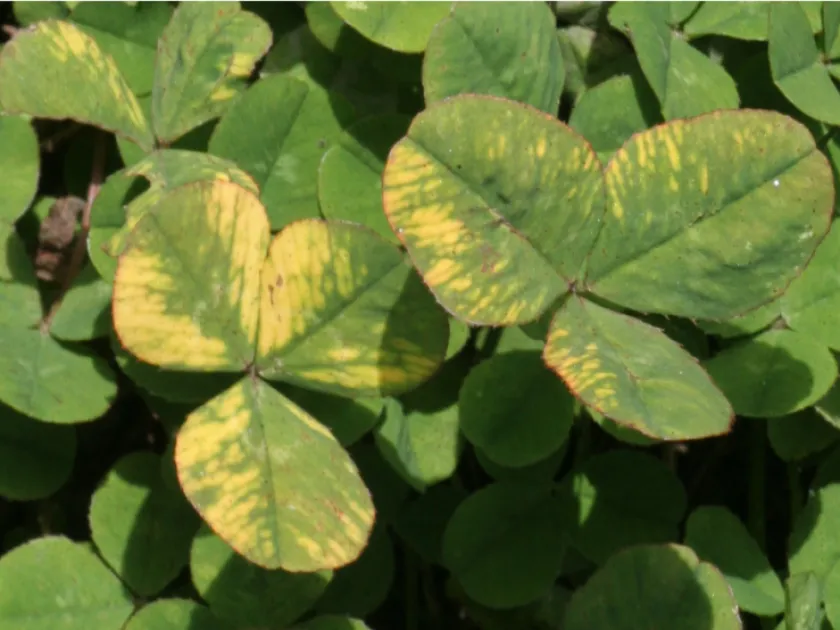
White clover (Trifolium repens) manifests as a highly competitive weed capable of rapid territorial expansion through its prostrate, creeping stems known as stolons. It forms dense, low-growing mats that easily outcompete slow-growing crops and ornamental lawn grasses.
The primary diagnostic sign is the presence of trifoliate leaves with characteristic white markings. The plant rapidly roots at the nodes of its stems, creating a resilient network that is difficult to eradicate by simple pulling or hoeing.
During the flowering season, the weed is easily identified by its globose, white or pinkish flower heads. These attract numerous pollinators, which may be counterproductive in areas where selective pest management is required.
Its root system is capable of reaching significant depths despite the plant's low profile, allowing it to access moisture even during drought, which grants it an advantage over many shallow-rooted cultivars.
Early colonization appears as small, innocuous rosettes, but within a single growing season, these can expand significantly, effectively choking out surrounding seedlings by denying them space and light.
While white clover is a botanical species rather than a pathogen, it acts as a severe biological competitor in agricultural settings. Its ability to thrive in poor soils is bolstered by a symbiotic relationship with nitrogen-fixing bacteria, specifically Rhizobium.
Because it provides its own nitrogen, it creates an imbalanced nutrient environment that suppresses non-leguminous crops, causing them to suffer from nutrient deficiencies and reduced vigor.
White clover acts as a vector or reservoir for various plant viruses and fungi. These pathogens can easily transfer from the clover to susceptible high-value crops, making it a critical threat in integrated pest management.
The physical density of its mat-like growth blocks light penetration to the soil surface, effectively preventing the germination and development of other beneficial species.
The plant's high regenerative capacity means that any stem fragment left behind during cultivation acts as a source of rapid re-establishment, creating a cycle of persistent infestation.
White clover thrives in moist, well-lit environments and is particularly adapted to compacted soils where other grasses struggle to penetrate. It flourishes in areas where drainage is poor and the soil is undisturbed.
Excessive irrigation and the lack of nitrogen fertilization for the target crop create perfect conditions for clover dominance. It is an opportunistic colonizer that fills any gaps left by damaged or poorly performing crops.
The seeds of this plant are remarkably persistent, remaining viable in the soil for many years. Its dual strategy of seed propagation and vigorous vegetative spread makes it an exceptionally difficult weed to eliminate completely.
Low mowing heights on lawns and infrequent weeding in gardens are direct catalysts for its spread. Its tolerance to trampling and mechanical stress makes it a dominant species in high-traffic outdoor areas.
The microclimate beneath clover mats is humid and stagnant, which indirectly encourages the development of root rots and fungal pathogens in the vicinity of the infested area.
The primary damage caused by white clover is the reduction of resource availability for crops. It competes aggressively for water, minerals, and light, leading to significant yield losses and lower product quality.
In turf management, white clover destroys the uniformity of the lawn, necessitating costly herbicide treatments and extensive replanting to restore the aesthetic appeal of the surface.
For vegetable growers, the moisture retention of clover mats fosters conditions for root rot and other moisture-loving pathogens, which can decimate sensitive seedling populations.
The dense root system significantly hampers tillage and cultivation efforts. It makes the soil difficult to prepare for subsequent plantings and interferes with the proper root development of neighboring agricultural plants.
Continued presence of the weed depletes specific soil nutrients and disrupts the microbial balance, which can lead to long-term soil fatigue and require complex soil remediation efforts.
Effective management begins with vigorous cultural practices. Ensuring that the target crops are healthy and growing strongly is the best defense, as dense canopy closure prevents clover seeds from germinating.
Mechanical removal must be thorough, ensuring that all stolons and roots are extracted. If even small parts of the root network remain, the plant will quickly recover, wasting the effort of the weeding process.
Chemical control involving selective broadleaf herbicides is often necessary for larger infestations. These should be applied at the recommended stages of plant development to ensure maximum efficacy without damaging the surrounding desired plants.
Preventative measures include sourcing clean, weed-free seeds and monitoring the borders of the field to prevent the migration of clover into the productive area via seeds carried by the wind or animals.
No discussions yet — be the first.