


Prices in stores
from4.4 €per 1 l
pack from 22.02 € per 5 l
2 offers from 2 stores
Last Treatment Interval, Days
1
By type of action
Systemic herbicide
By application method
Foliar herbicide
By Mode of Action
Selective herbicide
Your mark
0 votes
0% positive ratings
Store offers · 2 from 2 stores
2 offers in 2 stores — from 4.4 € per 1 l.
Available at: АгроАнталь · Фермер Центр
Prices are collected automatically from store websites and converted at the current exchange rate. Check the price and availability on the store website before ordering.
About product
A reliable solution for controlling a wide spectrum of broadleaf weeds in winter cereals.
Description
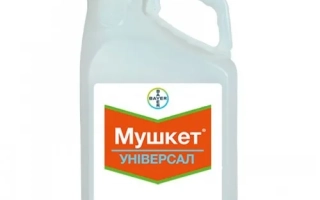
Protecting Winter Crops: Why Musket 20 WG Stands Out
In the constant battle for cereal crop yield, farmers often face the challenge of weed resistance. Musket 20 WG is a professional-grade tool that delivers results where standard herbicides fail. By utilizing a unique combination of active ingredients (amidosulfuron, iodosulfuron-methyl-sodium, and the mefenpyr-diethyl safener), this product ensures comprehensive control over problematic broadleaf weeds.
Key Advantages
- Maximum Selectivity: The inclusion of a safener allows the crop to rapidly neutralize the product's effect, ensuring safety even under fluctuating weather conditions.
- Broad Spectrum Control: It excels at eradicating stubborn weeds such as field thistle, common lambsquarters, pigweed, shepherd's purse, and wild radish.
- Systemic Action: The product is rapidly absorbed into plant tissues, halting development within hours of application.
Unlike many competitors, Musket 20 WG functions as a post-emergence herbicide, allowing for flexible application timing based on the actual weed pressure in the field. Despite its potent herbicidal efficacy, the product falls under hazard class 3, ensuring manageability for agricultural operators who follow standard safety protocols.
Who is this herbicide for?
Musket 20 WG is designed for operations utilizing intensive farming practices for winter wheat and barley. If your fields suffer from persistent perennials and cruciferous weeds, this herbicide provides a robust solution for ensuring clean fields. With a application rate of up to 25 grams per hectare, it represents a highly cost-effective investment in crop health and yield maximization.
Composition
Active ingredients
- Amidosulfuron гербицид Производные сульфонилмочевины
- Iodosulfuron-methyl-sodium гербицид Производные сульфонилмочевины
- Iodosulfuron-methyl-sodium
- Mefenpyr-diethyl антидот
Application
Used on crops
Specifications
| Last Treatment Interval, Days | 1 |
|---|---|
| By type of action | |
| By application method | |
| By Mode of Action | |
| By Application Timing | |
| Form of the preparation | |
| Application rate | Up to 0.5 L/ha, Up to 25 g/ha |
| Danger Class | 3 |
| Registration year | 2019 |
| Catalog | Catalog → Herbicides, Desiccants |
| Manufacturer | Schirm GmbH |
| Manufacturer | BAYER |
| Manufacturer | Imperial Chemical Logistics |
| Manufacturer | Exwold Technologies Ltd |
| Legal data |
Show · 1
|
| Country | Germany |
No reviews yet. Be the first to share your experience.
Alternatives
Herbicides, Desiccants · similar preparations



Pleiade Protect, SE (2-ethylhexyl ester of 2,4-D, 452 g/l + florasulam)
Hangzhou Ruijiang Chemical Co.
025 9 offers
4.44 €per 1 l ≈ 226 ₴


See also
Often considered together with this product


Recently viewed
Products you’ve viewed on this site
Reviews