


SKU #398
·
926 views
Optimum
Herbicides, Desiccants
Санрайз Кемікалз Ко. Лтд., Шанхай, КитайUser rating
0 votes0% positive reviews
No ratings yet — be the first.
Last Processing Date, Days
1
By Mode of Action
Selective herbicide
By Application Timing
Post-emergence herbicide
Form of the preparation
Water-soluble concentrate
Prices in stores
from8.8 €per 1 l
pack from 0.1 € per pack
28 offers from 18 stores
Store offers · 28 from 18 stores
Prices are updated on loadLoading offers…
Available at: Agro-sector · Agro-shop · АгроАнталь · Агроексперт-Трейд · Agrohim · Agroopt · Агро Пионер · Agroseeds · Agrotovar · ePole · Kostiuk · Kupa · Kurkul · ЗЗР Агро · Optoman · Proskura
Aggregator catalog: prices are collected automatically from store websites, normalized by AI and converted at the current exchange rate. Before ordering, confirm the price and availability on the store's website. This block is not indexed by search engines — the data is loaded after the page opens.
About product

A highly effective systemic herbicide featuring dicamba for robust control of stubborn broadleaf weeds in cereals and corn.
Last Processing Date, Days
1
By Mode of Action
Selective herbicide
By Application Timing
Post-emergence herbicide
Form of the preparation
Water-soluble concentrate
Description
Optimizing Weed Control: Technical Overview
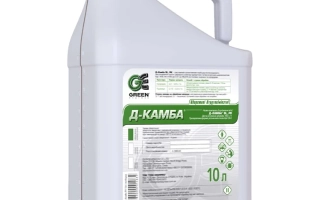
"Optimum" is a selective post-emergence herbicide produced by Sunrise Chemicals Co. Ltd., Shanghai, China. The formulation is built around dicamba (as a dimethylamine salt), a benzoic acid derivative that acts as a potent synthetic auxin. This chemistry remains a cornerstone for effective control of broadleaf weeds in cereal crops and maize.
Mechanism of Action and Systemic Efficiency
The technical efficacy of "Optimum" is rooted in its systemic nature. Once applied as a foliar treatment, the active ingredient is rapidly absorbed through the leaves and translocated throughout the plant's vascular system, accumulating in meristematic tissues. The mode of action triggers a hormonal imbalance, which is critical for agricultural practice:
- Phyto-hormonal disruption: By mimicking natural auxins, dicamba causes uncontrolled cell division and growth elongation, known as epinasty.
- Complete systemic control: The chemical effectively reaches the roots of perennial weeds, such as Cirsium arvense (Canada thistle) and Convolvulus arvensis (field bindweed), ensuring complete plant death rather than mere suppression.
- Selectivity: When used correctly, it poses no threat to established monocot crops like wheat, barley, oats, rye, millet, sorghum, and corn.
Usage and Technical Specifications
As a water-soluble concentrate, "Optimum" ensures ease of tank-mixing and high uniformity in the spray solution. It is highly effective against common agricultural weeds such as Amaranthus (pigweed), Chenopodium album (lambsquarters), and various mustard species. Depending on the weed pressure and development stage, application rates range from 0.5 to 1.0 L/ha.
The product is classified under Hazard Class 3, making it a manageable tool for intensive farming operations. With a pre-harvest interval of only 1 day, it provides producers with significant flexibility in crop protection management. Its role as a post-emergence insurance herbicide makes it an essential component of professional crop management programs.
Composition
Active ingredients
- Dicamba гербицид Производные бензойной кислоты
- Dicamba dimethylamine salt гербицид Производные бензойной кислоты
Application
Used on crops
Against weeds
Annual broadleaf weeds
Black nightshade
Cleavers
Cocklebur
Common chickweed
Common purslane
Common sowthistle
Corn spurrey
Creeping thistle
Flower-of-an-hour
Hedge bindweed
Jimsonweed
Knotweed
Lamiaceae
Marsh woundwort
Mustard
Perennial dicots
Perennial sow thistle
Puncturevine
Ragweed
Ranunculaceae
Redroot pigweed
Resistant to 2,4-D
Scarlet pimpernel
Sunflower
Tumbleweed
Velvetleaf
Wild mustard
Wild radish
Specifications hover over for a hint about the specification
|
Last Processing Date, Days
Last Processing Date, Days
Number of days from processing to harvest cleanup |
1 |
|---|---|
|
By Mode of Action
By Mode of Action
Herbicides are divided into two groups according to their mode of action: Non-selective herbicides — intended for the destruction of all plant species. They are applied in agricultural fields during the absence of the main crop (after harvest, before crop emergence, on fallow lan... |
|
|
By Application Timing
By Application Timing
Herbicides are classified according to application timing into pre-emergent and post-emergent herbicides. Pre-emergent herbicides are mostly soil-applied or granular formulations applied before the emergence of crop plants. They are applied either pre-sowing (during pre-sowing cu... |
|
| Form of the preparation | |
|
Drug Consumption
Drug Consumption
Mass of the preparation per unit of treated area. It is customary to express the dosage rate in kilograms per hectare. The dosage rate is most often given in terms of 100% active ingredient, although sometimes it is calculated based on the preparation in the form of application w... |
Up to 0.5 L/ha, From 0.5 - 1.0 L/ha |
| Danger Class | 3 |
|
By type of action
By type of action
Depending on their ability to move through living tissues, herbicides are divided into contact and systemic. Contact herbicides cause local damage to plant tissue upon contact, which dies or gradually degrades. This action does not always completely destroy the plant; often, its... |
|
|
By application method
By application method
Based on the method of application, herbicides are divided into foliar, soil, and root herbicides. Foliar herbicides are applied to vegetative plants and act through their above-ground organs. The main method of application for such preparations is spraying using sprayers or airp... |
|
| Registration year | 2010 |
| Catalog | Catalog → Herbicides, Desiccants |
| Manufacturer | Санрайз Кемікалз Ко. Лтд., Шанхай, Китай |
| Legal data |
Show · 1
|
| Country | China |
Not yet комментариев. Be the first!
Alternatives
Herbicides, Desiccants · similar preparations




See also
Often considered together with this product


Recently viewed
Products you’ve viewed on this site
Reviews · 0