


SKU #71833
·
65 views
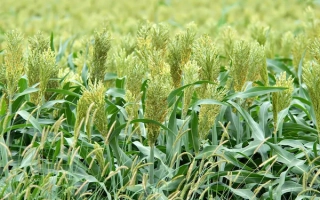
Sudan grass VIOSHNEVSKAYA
Sudan Grass
ECO 'STANDARD FARM'User rating
0 votes0% positive reviews
No ratings yet — be the first.
Protein content in dry matter (%)
10–12
Recommended seeding rate, kg/ha
20–25
Usage
On green feed, Hay Bales, Silage
Registration year
2009
About product

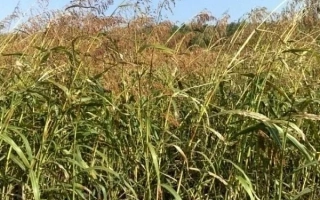
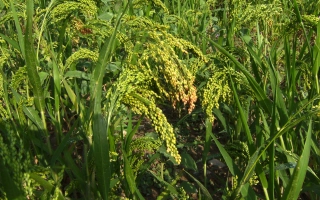
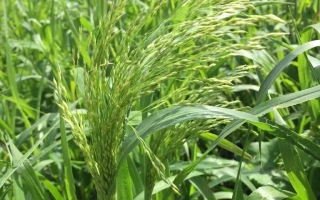
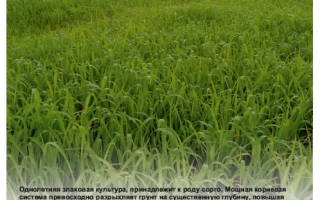
VIOSHNEVSKAYA is Sudan grass (Sorghum sudanense), an annual grass widely used in animal husbandry as a forage crop. The plant is characterized by high productivity and rich nutritional value: its green mass contains over 10% protein, 68% carbohydrates, as well as significant amounts of vitamins (A, B1, B2, B5, B6, E) and trace elements – copper, iron, zinc, magnesium, manganese, molybdenum, seleni…
Protein content in dry matter (%)
10–12
Recommended seeding rate, kg/ha
20–25
Usage
On green feed, Hay Bales, Silage
Registration year
2009
Description
VIOSHNEVSKAYA is Sudan grass (Sorghum sudanense), an annual grass widely used in animal husbandry as a forage crop. The plant is characterized by high productivity and rich nutritional value: its green mass contains over 10% protein, 68% carbohydrates, as well as significant amounts of vitamins (A, B1, B2, B5, B6, E) and trace elements – copper, iron, zinc, magnesium, manganese, molybdenum, selenium, potassium, and calcium. Due to its mild taste and pleasant smell, cows, horses, sheep, and other animals readily accept it as food.
Sudan grass is characterized by drought and salt resistance, heat-loving nature, and indifference to soil types. Its powerful root system improves soil structure, increasing the activity of microorganisms and earthworms, and also suppresses weeds due to intensive tillering. The plant grows rapidly: after sowing, intensive growth begins within 1 ½ months, during which height increases by 5–10 cm per day, allowing for several cuts per season – up to five per year.
For cultivation, it is recommended to sow seeds in continuous rows with inter-row spacing of 30–45 cm and a sowing rate of 20–30 kg per hectare. Seeds are buried to a depth of 3–5 cm, or up to 7 cm on dry and loose soils. After mowing, the plant regrows quickly, and silage or hay can be prepared from it. In one hectare during one summer, more than 1000 centners of fresh grass can be collected, making it a valuable resource for feeding cattle and other animals.
The product is packaged in a 0.5 kg zip-bag with a label, ensuring convenient storage and transport. VIOSHNEVSKAYA provides high tillering energy, improves living conditions for soil organisms, and increases yield, making it an indispensable element in animal rations and agronomic complexes.
Sudan grass is characterized by drought and salt resistance, heat-loving nature, and indifference to soil types. Its powerful root system improves soil structure, increasing the activity of microorganisms and earthworms, and also suppresses weeds due to intensive tillering. The plant grows rapidly: after sowing, intensive growth begins within 1 ½ months, during which height increases by 5–10 cm per day, allowing for several cuts per season – up to five per year.
For cultivation, it is recommended to sow seeds in continuous rows with inter-row spacing of 30–45 cm and a sowing rate of 20–30 kg per hectare. Seeds are buried to a depth of 3–5 cm, or up to 7 cm on dry and loose soils. After mowing, the plant regrows quickly, and silage or hay can be prepared from it. In one hectare during one summer, more than 1000 centners of fresh grass can be collected, making it a valuable resource for feeding cattle and other animals.
The product is packaged in a 0.5 kg zip-bag with a label, ensuring convenient storage and transport. VIOSHNEVSKAYA provides high tillering energy, improves living conditions for soil organisms, and increases yield, making it an indispensable element in animal rations and agronomic complexes.
Crop & resistance
Crop
Specifications
| Protein content in dry matter (%) | 10–12 |
|---|---|
| Recommended seeding rate, kg/ha | 20–25 |
| Usage | |
| Registration year | 2009 |
| Catalog | Catalog → Sudan Grass |
| Manufacturer | ECO 'STANDARD FARM' |
| Legal data |
Show · 5
|
| Country | Russia |
Store offers
Prices are updated on loadLoading offers…
Aggregator catalog: prices are collected automatically from store websites, normalized by AI and converted at the current exchange rate. Before ordering, confirm the price and availability on the store's website. This block is not indexed by search engines — the data is loaded after the page opens.
Not yet комментариев. Be the first!
Alternatives
Sudan Grass · similar varieties






See also
Often considered together with this variety





Recently viewed
Products you’ve viewed on this site
Reviews · 0