


SKU #71843
·
56 views
LYRA
Sudan Grass
User rating
0 votes0% positive reviews
No ratings yet — be the first.
Plant Height
200–300
Protein content in dry matter (%)
10–12
Usage
On green feed, Hay Bales, Silage
Registration year
2002
Prices in stores
from1.3 €per 1 kg
pack from 1.3 € per 1 kg
3 offers from 2 stores
Store offers · 3 from 2 stores
Prices are updated on loadLoading offers…
Available at: 7 Соток · AgroSemka
Aggregator catalog: prices are collected automatically from store websites, normalized by AI and converted at the current exchange rate. Before ordering, confirm the price and availability on the store's website. This block is not indexed by search engines — the data is loaded after the page opens.
About product

Lyra – a variety of Sudan grass (Sorghum xdrummondii), obtained by recurrent selection in mutant offspring of the Kinel'skoe 3×Brodskaya 2 hybrid. The plant is erect, up to 300 cm tall, with a cylindrical stem covered by a weak waxy bloom that turns straw-colored at maturity. Leaves are broad-linear, juicy, up to 60 cm long and 4.5 cm wide, also having a slight waxy layer. Bushiness is moderate –…
Plant Height
200–300
Protein content in dry matter (%)
10–12
Usage
On green feed, Hay Bales, Silage
Registration year
2002
Description
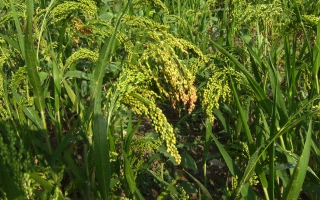
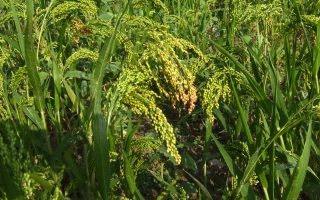
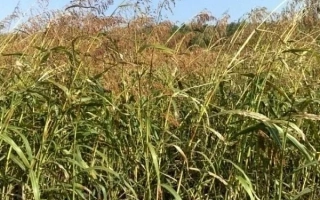
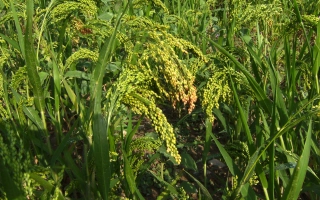
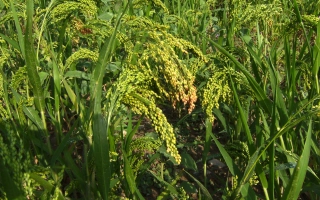
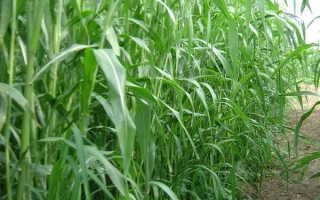
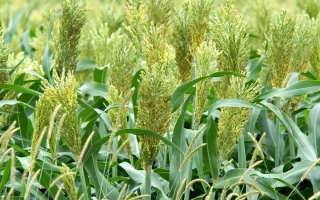
Lyra – a variety of Sudan grass (Sorghum xdrummondii), obtained by recurrent selection in mutant offspring of the Kinel'skoe 3×Brodskaya 2 hybrid. The plant is erect, up to 300 cm tall, with a cylindrical stem covered by a weak waxy bloom that turns straw-colored at maturity. Leaves are broad-linear, juicy, up to 60 cm long and 4.5 cm wide, also having a slight waxy layer. Bushiness is moderate – from two to fifteen productive stems per plant.
The variety is distinguished by high yield of both green mass and seeds. In the first cut, average yield is about 273 c/ha (up to 440 c/ha), in the second – 100 c/ha (up to 130 c/ha). Over two cuts, total production reaches 373 c/ha, exceeding the standards of Novosibirskaya84 and Kinel'skaya100. Seed yield is approximately 27 c/ha, higher than similar varieties.
Lyra possesses resistance to drought, spring frosts, and powdery head smut. At the same time, the plant does not lodge and is suitable for mechanized harvesting. The vegetative period from germination to maturity is about 100 days. Due to high protein content (≈11.8%) and rich nutritional value (sugar, vitamins, minerals), Sudan grass Lyra is widely used as a forage crop for cattle, horses, sheep, and other animals. It can be used fresh, as well as processed into silage or hay; up to five cuts can be made in one season, allowing to harvest over 1000 centners of grass per hectare.
The variety is distinguished by high yield of both green mass and seeds. In the first cut, average yield is about 273 c/ha (up to 440 c/ha), in the second – 100 c/ha (up to 130 c/ha). Over two cuts, total production reaches 373 c/ha, exceeding the standards of Novosibirskaya84 and Kinel'skaya100. Seed yield is approximately 27 c/ha, higher than similar varieties.
Lyra possesses resistance to drought, spring frosts, and powdery head smut. At the same time, the plant does not lodge and is suitable for mechanized harvesting. The vegetative period from germination to maturity is about 100 days. Due to high protein content (≈11.8%) and rich nutritional value (sugar, vitamins, minerals), Sudan grass Lyra is widely used as a forage crop for cattle, horses, sheep, and other animals. It can be used fresh, as well as processed into silage or hay; up to five cuts can be made in one season, allowing to harvest over 1000 centners of grass per hectare.
Crop & resistance
Crop
Disease resistance
Specifications
| Plant Height | 200–300 |
|---|---|
| Protein content in dry matter (%) | 10–12 |
| Usage | |
| Registration year | 2002 |
| Catalog | Catalog → Sudan Grass |
| Legal data |
Show · 1 |
| Country | Russia |
Not yet комментариев. Be the first!
Alternatives
Sudan Grass · similar varieties



See also
Often considered together with this variety




Recently viewed
Products you’ve viewed on this site
Reviews · 0