


SKU #68611
·
56 views
Alfalfa TUJANA
Lucerne
Prices in stores
No offers yet — stores have not added prices for this product yet.
Similar varieties with prices
-
Banat VSIFVCNS (Novi Sad)
from 3.84 €per 1 kg
-
 HYBRIFORS 2400Dieckmann GmbH&Co.KG
from 4 225.32 €
HYBRIFORS 2400Dieckmann GmbH&Co.KG
from 4 225.32 €
-
 ElizavetaOOO 'AGROKOMPANIYa L I Z'
from 3.8 €per 1 kg
ElizavetaOOO 'AGROKOMPANIYa L I Z'
from 3.8 €per 1 kg
-
 ASHEN KATY
from 1.81 €per 1 kg
ASHEN KATY
from 1.81 €per 1 kg
Plant Height
65-70 cm
Registration year
1995
Your mark
0 votes
0% positive ratings
Description
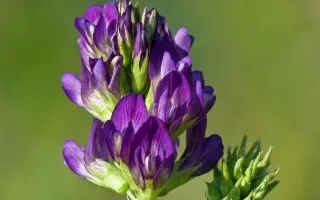
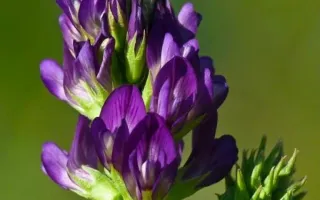
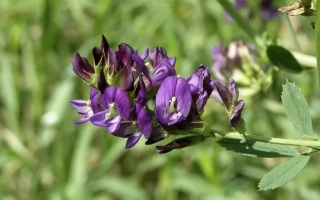
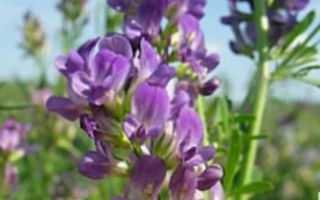
Tujana Lucerne is a variant lucerne variety developed by mass selection at the Buryat Research Institute of Agriculture and Horticulture. The plant reaches a height of up to 110 cm and has a semi-upright bush form with low bushiness, averaging about 20 stems per bush. Leaves are lanceolate, soft, and slightly hairy on the underside, while inflorescences are represented by cylindrical racemes of medium density with variegated calyx coloring. Seeds are yellow, kidney-shaped, with a mass of 1000 seeds ranging from 2.0 to 2.3 g. The vegetation period varies from 68 to 170 days depending on the development stage; the plant is characterized by good spring and post-mowing regrowth. Tujana Lucerne is distinguished by high yields of dry matter and seeds, reaching 96 centners/ha in some regions, significantly exceeding standard varieties. In terms of protein content and collection, it does not lag behind benchmark varieties, making it a valuable fodder plant for livestock. However, the variety is susceptible to damage by the root-knot weevil, requiring attention during cultivation. The plant adapts well to various soil conditions and can be used for both fodder purposes and improving soil structure by enriching it with nitrogen. Lucerne in general is a perennial fodder crop with high nutritional value, containing significant amounts of proteins, vitamins, and minerals. It is used to obtain green mass, hay, and silage, and also serves as an excellent source of nectar, capable of yielding up to 200-250 kg of honey per hectare. Sowing seeds is recommended in early spring with a sowing rate of 15-20 kg/ha and a burial depth of 2-4 cm depending on soil moisture. Lucerne is frost-resistant and capable of growing on various soil types, including poor and problematic areas, making it a versatile and useful plant for agriculture and gardening.
Crop & resistance
Crop
Specifications
| Plant Height | 65-70 cm |
|---|---|
| Registration year | 1995 |
| Catalog | Catalog → Lucerne |
| Legal data |
Show · 1 |
| Country | Russia |
No reviews yet. Be the first to share your experience.
Alternatives
Alfalfa seeds · similar varieties


See also
Often considered together with this variety


Recently viewed
Products you’ve viewed on this site
Reviews