


SKU #68621
·
51 views
LUCIA
Lucerne
User rating
0 votes0% positive reviews
No ratings yet — be the first.
Plant Height
52-73
Registration year
2010
Prices in stores
from5.04 €per 1 kg
pack from 2.52 € per 500 g
1 offer from 1 store
Store offers · 1 from 1 stores
Prices are updated on loadLoading offers…
Available at: Uley
Aggregator catalog: prices are collected automatically from store websites, normalized by AI and converted at the current exchange rate. Before ordering, confirm the price and availability on the store's website. This block is not indexed by search engines — the data is loaded after the page opens.
About product

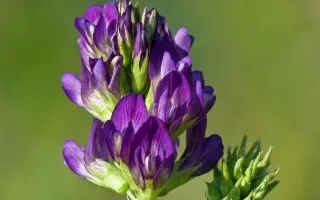
Lucerne of the Lucia variety is a mid-early cut variety developed through hybridization of promising breeding forms and intended for feed use. Plants have an erect or semi-erect bush, 52 to 73 cm high, with green stems and trifoliate leaves of inverse-ovate and elliptical shape. Inflorescences are presented as multi-flowered racemes about 2.8 cm long, and seeds are light yellow in color, weighing…
Plant Height
52-73
Registration year
2010
Description
Lucerne of the Lucia variety is a mid-early cut variety developed through hybridization of promising breeding forms and intended for feed use. Plants have an erect or semi-erect bush, 52 to 73 cm high, with green stems and trifoliate leaves of inverse-ovate and elliptical shape. Inflorescences are presented as multi-flowered racemes about 2.8 cm long, and seeds are light yellow in color, weighing 1.9 to 2.1 g per 1000 seeds. The vegetative period until the first cut is about 56 days, and until seed maturity is 109 days. The variety is distinguished by high yield and quality indicators. Average green mass yield reaches 55–78 c/ha, and dry matter – from 48.5 to 73.7 c/ha, which exceeds the regional trial standards. Crude protein content in dry matter varies from 13.4% to 20%, ensuring high feed nutritional value. During trials, the variety showed resistance to diseases and pests, as well as high drought tolerance and resistance to lodging, making it a reliable choice for various climatic conditions. Lucerne Lucia is recommended for cultivation in various regions, including the North Caucasian, Lower Volga, and Urals regions of Russia, as well as the West Kazakhstan, Akmolinsk, Pavlodar, and North Kazakhstan regions of Kazakhstan. For successful cultivation, it is recommended to maintain spatial isolation from other leguminous crops of at least 200 meters. Due to high spring regrowth intensity and after cuts, the variety provides stable and quality feed for farm animals.
Crop & resistance
Crop
Specifications
| Plant Height | 52-73 |
|---|---|
| Registration year | 2010 |
| Catalog | Catalog → Lucerne |
| Legal data |
Show · 1
|
| Country | Russia |
Not yet комментариев. Be the first!
Alternatives
Alfalfa seeds · similar varieties



See also
Often considered together with this variety




Recently viewed
Products you’ve viewed on this site
Reviews · 0