
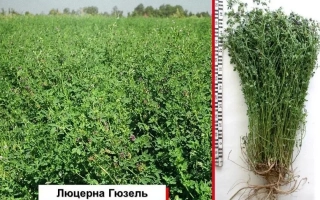

SKU #68625
·
52 views
BIBINUR
Lucerne
User rating
0 votes0% positive reviews
No ratings yet — be the first.
Plant Height
60-80
Registration year
2000
About product

BIBINUR is a variable lucerne (Medicago sativa L. nothosubsp. varia) variety belonging to the blue-hybrid type. It was bred in 1995 by individual-family selection from a hybrid population of lucerne obtained through free cross-pollination of samples from the All-Russian Institute of Plant Sciences. The plant is of medium height with a semi-upright bush reaching 60–80 cm, branched stems, and oblong…
Plant Height
60-80
Registration year
2000
Description
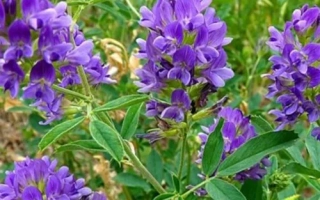
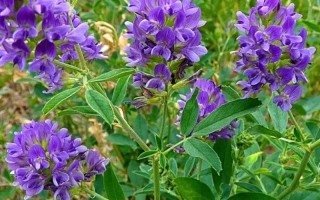
BIBINUR is a variable lucerne (Medicago sativa L. nothosubsp. varia) variety belonging to the blue-hybrid type. It was bred in 1995 by individual-family selection from a hybrid population of lucerne obtained through free cross-pollination of samples from the All-Russian Institute of Plant Sciences. The plant is of medium height with a semi-upright bush reaching 60–80 cm, branched stems, and oblong-ovate, sparsely hairy leaves. The flowers have various shades of purple, and the inflorescences are medium-loose racemes. Seeds are light brown, kidney-shaped, with a mass of 1000 seeds ranging from 2.0 to 2.5 g. The variety is characterized by medium maturity, winter hardiness, and drought resistance. It is resistant to powdery mildew and fusarium root rot, ensuring good preservation and productivity under various climatic conditions. The vegetative period from regrowth to the first cut is 56–66 days, and flowering begins from early to medium stages. Green mass yield over two cuts reaches 338 c/ha, while crude protein content in dry matter is about 20.5%. The average dry matter yield in the Volga-Vyatka region is 52.4 c/ha, which is 5.7 c/ha higher than the average standard. BIBINUR has good regrowth after cutting, contributing to high productivity in multiple cuts. The variety is recommended for growing for seeds and feed in various agricultural zones, including the Urals steppes, pre-Urals steppes, and southern forest-steppe zones. Despite high yield and disease resistance, the variety is less winter-hardy compared to yellow-hybrid lucerne varieties, which should be considered when choosing for regions with harsh winters.
Crop & resistance
Crop
Disease resistance
Specifications
| Plant Height | 60-80 |
|---|---|
| Registration year | 2000 |
| Catalog | Catalog → Lucerne |
| Legal data |
Show · 8
|
| Country | Russia |
Store offers
Prices are updated on loadLoading offers…
Aggregator catalog: prices are collected automatically from store websites, normalized by AI and converted at the current exchange rate. Before ordering, confirm the price and availability on the store's website. This block is not indexed by search engines — the data is loaded after the page opens.
Not yet комментариев. Be the first!
Alternatives
Alfalfa seeds · similar varieties





See also
Often considered together with this variety




Recently viewed
Products you’ve viewed on this site
Reviews · 0