


SKU #68632
·
49 views
Selena
Lucerne
User rating
0 votes0% positive reviews
No ratings yet — be the first.
Plant Height
85-110
Registration year
2008
About product

A reliable alfalfa variety with high regrowth intensity and excellent protein productivity metrics.
Plant Height
85-110
Registration year
2008
Description
Investing in Productive Longevity
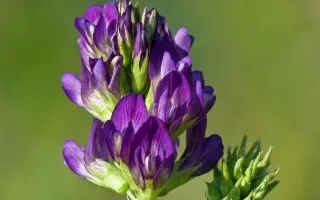
The Selena alfalfa variety is the choice for agronomists focused on obtaining stable, high-protein biomass under intensive grassland management. Developed by the Williams Federal Research Center for Fodder Crops (FNTS VIK) in collaboration with the Moscow Breeding Station, this variety guarantees adaptability to temperate climate zones with moderate moisture regimes.
The practical potential of Selena is best realized when creating a forage base for dairy farming. With a plant height of 85–110 cm, it provides optimal leafiness, which is critical for high-quality haylage and hay production. The variety demonstrates rapid regrowth after cutting, allowing operations to achieve 3–4 harvest cycles per season when agronomic practices are followed.
Agronomic Highlights
- Sowing schedule: The variety is responsive to early spring planting, allowing the crop to effectively utilize residual winter moisture for rapid root establishment.
- Utilization: The primary use case is the production of nutrient-dense forage. Due to its balanced protein content, dried Selena mass serves as a core component in cattle rations.
- Management: The variety features high winter hardiness and drought tolerance, which reduces the risks of crop thinning after harsh winters. This makes it a reliable asset for establishing long-term pastures and hay fields.
When planning acreage, it is important to note that Selena performs best in fertile soils and responds well to phosphate-potash fertilization. By utilizing this variety, farmers can minimize their reliance on purchased protein supplements, ensuring their livestock are fed with high-quality, farm-grown forage.
Crop & resistance
Crop
Specifications
| Plant Height | 85-110 |
|---|---|
| Registration year | 2008 |
| Catalog | Catalog → Lucerne |
| Legal data |
Show · 2
|
| Country | Russia |
Store offers
Prices are updated on loadLoading offers…
Aggregator catalog: prices are collected automatically from store websites, normalized by AI and converted at the current exchange rate. Before ordering, confirm the price and availability on the store's website. This block is not indexed by search engines — the data is loaded after the page opens.
Not yet комментариев. Be the first!
See also
Often considered together with this variety


Recently viewed
Products you’ve viewed on this site
Reviews · 0