

Description
Symptoms
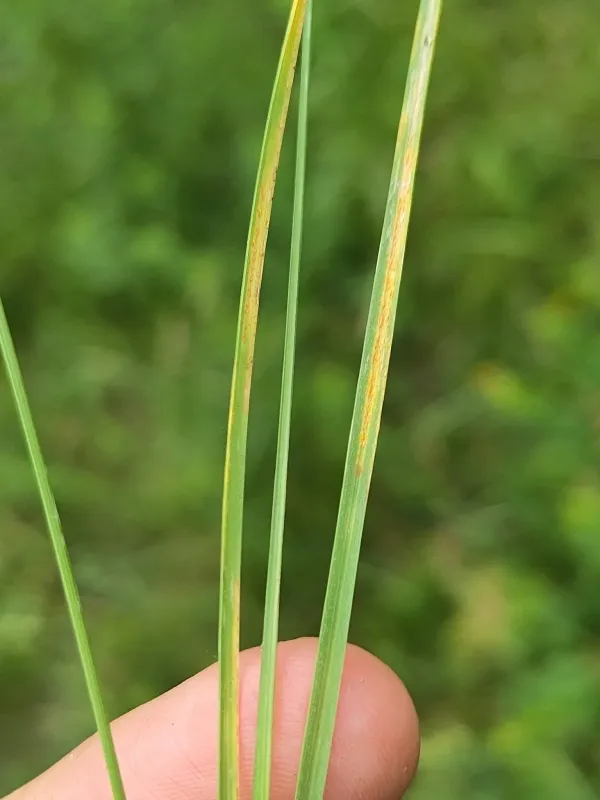
The most recognizable symptom of bluegrass rust is the emergence of small, bright orange to yellow pustules scattered across the surface of the blades.
These pustules, known as uredinia, eventually rupture the leaf epidermis, releasing powdery masses of spores that can easily spread via wind or water splashes.
As the infection progresses, affected leaves turn yellow and may wither, leading to a general thinning and browning of the affected turf area.
On alternative hosts, the disease manifests as distinct, bright orange cluster-cups on the undersides of leaves, which serve as the infection source for grass in the spring.
- Yellow and orange pustules
- Yellowing of leaves (chlorosis)
- Stunting of plant growth
- Leaf necrosis and drying
Pathogen
The causal agent of this disease is the fungus Puccinia poarum, an obligate parasite belonging to the order Pucciniales.
This pathogen exhibits a heteroecious life cycle, meaning it requires two unrelated host species to complete its complex reproductive stages.
The primary hosts are species of the Poa genus (bluegrass), while the alternative hosts are typically plants in the Tussilago and Petasites genera.
The fungus produces several types of spores, with urediniospores playing a key role in the rapid, cyclical reinfection of bluegrass during the growing season.
Survival over winter occurs through mycelium in perennial host tissues or via teliospores that can withstand colder temperatures until conditions improve.
Conditions for development
The development of Puccinia poarum is highly dependent on environmental moisture, specifically the presence of dew or high humidity on leaf surfaces.
Optimal temperatures for spore germination and colonization typically range from 15°C to 22°C, making spring and early autumn peak periods for activity.
Poor air circulation, caused by dense canopy growth or inadequate spacing, traps moisture and significantly increases the susceptibility of the grass.
Cloudy and wet weather patterns accelerate the disease cycle, while prolonged dry spells usually inhibit the further spread of the pathogen.
Shaded areas with high humidity levels are often the first to show symptoms, as these microclimates favor the fungus's reproductive biology.
Why it matters
Bluegrass rust causes severe aesthetic damage to lawns and sports fields, resulting in patchy, discolored areas that are visually unattractive.
By compromising the integrity of the leaf tissue, the disease significantly impairs the plant's ability to perform photosynthesis, weakening the entire root system.
In agricultural settings, infected pasture grasses show reduced biomass yield and lower forage quality, which negatively impacts livestock feeding value.
Continuous infection weakens the turf's overall health, making it more susceptible to secondary stressors like weed encroachment, drought, and extreme heat.
Economic losses are associated with the need for fungicide applications and the potential requirement to overseed or renovate severely damaged sections.
Protection
Cultural management is the first line of defense, focusing on the removal of alternative host plants like coltsfoot from the immediate surrounding area.
Improving the lawn's microenvironment through regular mowing, vertical cutting, and core aeration helps to reduce leaf wetness and promote drying.
Adopting irrigation practices that provide deep but infrequent waterings, preferably during early morning hours, helps minimize the duration of leaf wetness.
For high-value turf areas, systemic fungicides containing active ingredients like tebuconazole or azoxystrobin can be used to manage outbreaks effectively.
Maintaining balanced soil fertility, particularly avoiding excess nitrogen which encourages soft, susceptible growth, helps the grass build natural resistance.
Content graph
Connections · Bluegrass rust
Most often together:
Marketplace
Products · 37


Community
Discussion
No discussions yet — be the first.