
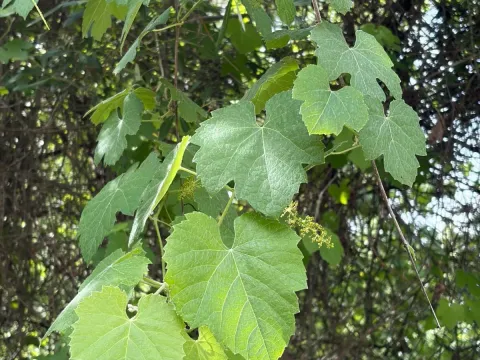
Gird grape
Vitis girdiana
The Gird grape (Vitis girdiana) is a robust woody vine belonging to the Vitaceae family. Native to Southern California and Baja California, it is primarily found in riparian habitats, such as canyons and creek banks, where it thrives in moist environments.
What the section contains
Gird grape
Botanically, the species is recognized by its dense, heart-shaped leaves that feature a distinct grayish-white pubescence on the undersides. The vines are aggressive climbers, utilizing tendrils to ascend high into tree canopies for sunlight exposure.
Regarding soil requirements, Vitis girdiana prefers deep, well-drained soils that retain sufficient moisture. While it shows remarkable tolerance for seasonal dry spells, consistent hydration is essential for vigorous vine growth and optimal foliage health.
The climate requirements for this plant include a Mediterranean-type environment with long, warm growing seasons. It is well-adapted to high heat levels, provided that the root system has access to supplemental moisture from surrounding water sources.
In agricultural settings, this species is sometimes utilized in breeding programs or as rootstock due to its inherent hardiness and ability to thrive in poor soil conditions, though it requires management due to its invasive growth habit.
Common fungal diseases, particularly powdery mildew (Erysiphe necator), can significantly impact the health of the leaves and fruits. Maintaining airflow through proper training and pruning is the primary defense strategy.
Pests such as the grape leafhopper and various mites often target this species. In native settings, these pests are usually kept in check by natural predators, but in cultivation, they may require careful monitoring.
Viral pathogens represent a significant risk, as they can spread rapidly through infected cuttings or grafting tools. Strict sanitation protocols are required when propagating the vine to maintain healthy stock.
Root rot caused by poorly drained soil or excessive irrigation can weaken the plant, making it more susceptible to opportunistic secondary infections and environmental stresses.
Competing invasive plants often pose a threat to young seedlings by overshading them; therefore, early-stage weed management is crucial for the successful establishment of the vine in restoration projects.