
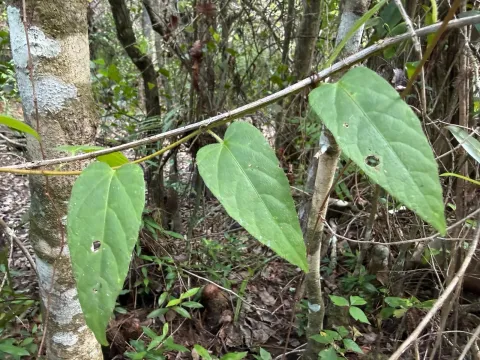
Cissus verticillata
Cissus verticillata
Cissus verticillata, commonly known as the princess vine, belongs to the Vitaceae family. It is a vigorous, perennial climbing plant native to the tropical and subtropical regions of the Americas, thriving in dense forest understories.
What the section contains
Cissus verticillata
The culture requires a stable environment with temperatures between 20°C and 28°C. Being a tropical species, it does not tolerate frost, which makes it suitable primarily for greenhouse or indoor commercial production in temperate regions.
Soil requirements dictate the use of well-draining, nutrient-rich potting mixes. A substrate rich in organic matter, maintaining a slightly acidic to neutral pH, is considered optimal for healthy root development and biomass production.
Light intensity is a critical factor for successful growth. While the plant prefers bright, indirect sunlight, it can adapt to lower light conditions, though this typically results in a slower growth rate and reduced leaf size.
Humidity management is essential. The plant prefers high ambient humidity levels, similar to its native tropical habitat. Regular misting or the use of automated irrigation systems in greenhouse settings ensures optimal vegetative growth.
The economic value of Cissus verticillata lies in its widespread use in traditional medicine and its appeal in the ornamental plant industry. Extracts from the leaves and stems are studied for their potential analgesic and anti-inflammatory properties.
Greenhouse yields are maximized by implementing a controlled environment that promotes continuous growth cycles. The plant's ability to propagate rapidly via stem cuttings allows for efficient scaling of production in commercial nurseries.
In ornamental landscaping, the yield is measured by the plant's capacity to cover walls, trellises, and interior vertical structures. Proper training and pruning are essential to maintain the desired density and structural integrity of the vine.
Balanced fertilization programs, particularly those emphasizing nitrogen during the vegetative phase, significantly increase the total biomass output. Regular pruning also encourages lateral branching, which contributes to a more robust yield of plant tissue.
Efficient management practices include a harvesting schedule that avoids plant exhaustion, ensuring that the plant can regenerate quickly after material is collected for medicinal extraction or commercial sale.
Spider mites are the most common pests encountered in controlled environment cultivation. They flourish in warm, dry air, making constant vigilance and humidity management the primary strategies for prevention and control.
Root rot, primarily caused by Phytophthora or Pythium species, occurs when soil drainage is insufficient. Strict adherence to irrigation schedules and the use of sterile growing media are critical to preventing these infections.
Mealybugs and aphids can also affect Cissus verticillata, particularly when plants are grown in close proximity. Integrated pest management, including the introduction of beneficial insects, is recommended for sustainable production.
Nutritional deficiencies often manifest as interveinal chlorosis, which can weaken the plant and make it more susceptible to opportunistic pathogens. Regular soil testing and precise micronutrient application are standard agronomic procedures.
Preventative sanitation is paramount to minimize disease spread. This includes cleaning tools, sterilizing greenhouse benches, and inspecting new plant material for signs of pests before introducing them into the main crop area.