
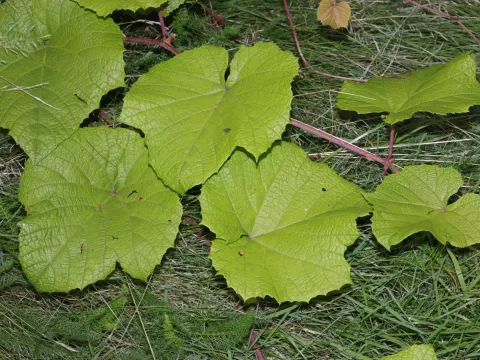
Crimson Glory Vine
Vitis coignetiae
The Crimson Glory Vine (Vitis coignetiae) is a vigorous deciduous liana belonging to the Vitaceae family. Native to the forests of East Asia, including Japan and Korea, this plant is renowned for its ability to climb tall trees, reaching heights of up to 20 meters in its natural habitat.
What the section contains
Crimson Glory Vine
The species thrives in deep, fertile, loamy soils that offer good drainage while maintaining consistent moisture. Unlike many commercial grape varieties, this ornamental vine exhibits excellent cold hardiness, making it well-suited for temperate climates where it can withstand harsh winter conditions without protection.
To support its rapid growth, the vine requires sturdy structures such as pergolas, fences, or large walls. Its strong tendrils allow it to attach firmly to surfaces. While it appreciates a sunny spot, it is remarkably shade-tolerant, which broadens its utility for garden design in various light conditions.
Pruning is essential to control its expansive growth and should be performed during late winter or early spring before sap flow begins. Excessive bleeding can occur if pruning is attempted after the buds start to swell, which may weaken the plant temporarily.
Its primary use is ornamental. The large, rounded leaves provide lush summer foliage and transform into a spectacular display of brilliant crimson and purple shades during autumn. This seasonal change makes it a favorite for landscaping projects that require high aesthetic impact.
Crimson Glory Vine possesses a high degree of natural resistance to common fungal pathogens that plague table grapes, such as powdery mildew and downy mildew. This resilience makes it a low-maintenance option for sustainable gardening practices.
Pests are generally not a major concern, although leaf rollers or spider mites may appear during periods of extreme drought and low humidity. Maintaining proper soil moisture and occasional misting of the foliage can effectively prevent such infestations.
Root rot can occur if the plant is grown in waterlogged soil with poor drainage. Providing a well-aerated planting site is crucial to ensure long-term health and vigor, especially in areas with heavy clay soils.
Sanitation practices, such as clearing away debris and fallen leaves at the end of the season, help to maintain a healthy environment around the vine base. This simple step is effective in preventing the buildup of potential soil-borne pathogens.
Overall, it is a robust and long-lived climber that requires little beyond space and a solid structure. Gardeners appreciate it for its ability to provide rapid vertical coverage and its minimal need for chemical disease control.