
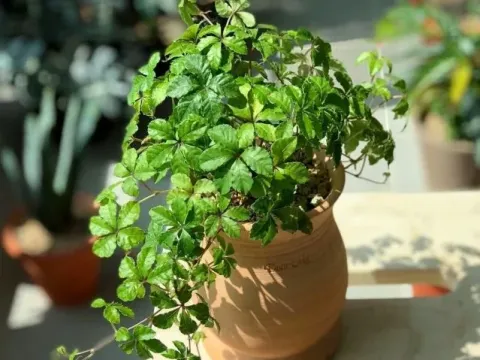
Kangaroo vine
Cissus antarctica
The Kangaroo vine (Cissus antarctica) is a robust evergreen climbing plant belonging to the Vitaceae family. Originating from the subtropical rainforests of Australia, it is well-regarded for its glossy, serrated foliage and vigorous growth habit in domestic settings.
What the section contains
Kangaroo vine
Optimal growth requires a stable temperature range between 18 °C and 25 °C. While the plant can tolerate slightly cooler conditions during its dormant winter phase, it should be protected from freezing temperatures, which can severely damage the vine's vascular system.
The culture thrives in well-drained, nutrient-rich potting soil. It is essential to maintain consistent moisture levels, ensuring the top layer of the soil dries out slightly between waterings. Proper drainage is crucial to prevent the accumulation of excess water around the roots.
Lighting should be bright but indirect. Direct, intense sunlight will scorch the leaves and fade their natural dark green color. Conversely, insufficient light will cause the stems to grow thin and elongated, significantly reducing the plant's aesthetic value.
Routine maintenance includes occasional pruning to encourage bushier growth and regular fertilizing during the growing season. Applying a balanced liquid fertilizer once a month supports the development of lush foliage and maintains the health of the plant.
Spider mites are a common threat, particularly in environments with low air humidity. These tiny pests pierce the leaf surfaces, causing a stippled, mottled appearance and premature leaf drop if not addressed with prompt mite control measures.
Scale insects can often be found on the undersides of leaves and stems. They feed on plant sap and secrete a sticky substance known as honeydew, which can subsequently attract sooty mold, further compromising the health of the Kangaroo vine.
Root rot, primarily caused by Phytophthora or Pythium species, is a major concern when soil aeration is poor. This disease leads to a sudden collapse of the plant and necessitates a sterile potting mix and better drainage practices to rectify the issue.
Mealybugs are another potential nuisance that hide in the leaf axils. Due to their waxy coating, they can be difficult to eliminate; therefore, systemic insecticides are often recommended to achieve effective control in indoor plant collections.
Maintaining good air circulation is a critical prophylactic measure against fungal diseases. If infection occurs, removing the affected leaves and applying appropriate fungicides can save the plant and prevent the spread of the pathogen to neighboring specimens.