
Munson grape
Vitis munsoniana
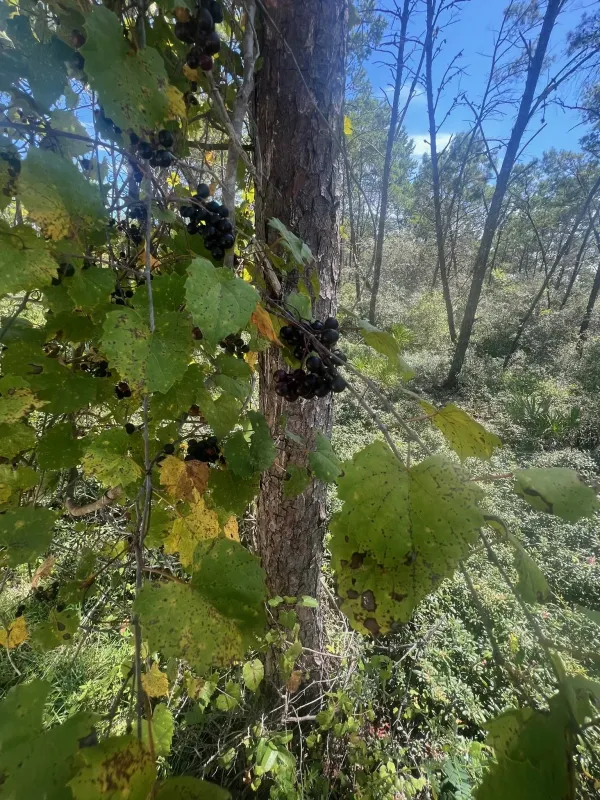
Description
Growing requirements
The Munson grape (Vitis munsoniana) belongs to the Vitaceae family and is native to the southeastern United States. It is a vigorous climbing vine typically found in the subtropical regions of Florida and surrounding states, where it thrives in natural ecosystems.
This species is well-adapted to sandy and well-drained soils, which are typical of its native range. It demonstrates remarkable tolerance to nutrient-poor soil conditions, allowing it to compete effectively in diverse environmental habitats where other varieties might struggle.
Regarding climatic requirements, the Munson grape prefers warm, humid subtropical climates with long growing seasons. It is not highly frost-hardy, which limits its range of cultivation primarily to temperate and warm areas where the risk of extreme winter temperatures is minimal.
Botanically, it is characterized by thin, flexible vines and relatively small leaves, distinguishing it from the larger-leaved Vitis vinifera varieties. The vine’s growth habit is aggressive, often allowing it to cover forest canopy areas to maximize sunlight exposure.
In terms of practical use, the Munson grape is rarely grown for fruit production. Instead, its primary value lies in viticultural research and breeding programs. It serves as a vital genetic source for developing new cultivars that are resilient to environmental stressors.
Main diseases and pests
The Munson grape possesses inherent resistance to several major grapevine diseases. This genetic resilience makes it a highly desirable candidate for interspecific hybridization, aiming to combine its robustness with the high fruit quality of commercial grape varieties.
While the species is naturally hardy, it can still be vulnerable to pressure from specific insect pests like phylloxera, although it usually manages to survive such attacks better than many domesticated vines. Monitoring for population surges of these insects is standard in research nurseries.
Fungal issues, such as powdery mildew or anthracnose, can affect the plant if conditions are overly damp with poor air circulation. Proper spacing and site selection are critical to maintaining the plant's health in controlled agricultural settings.
Invasive or introduced pests can pose a greater threat than native ones. Therefore, researchers often implement strict quarantine protocols when working with this species to ensure that no harmful pathogens are introduced into the local viticultural environment.
Maintaining a diverse gene pool is essential for the future of viticulture. Ongoing studies on the Munson grape continue to reveal new information about its unique immune response mechanisms, providing scientists with tools to fight evolving plant threats.