
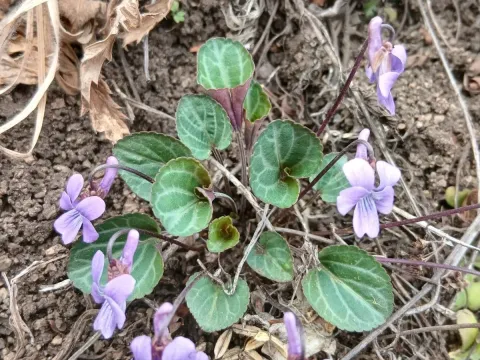
Variegated violet
Viola variegata
Seeds of Viola variegata should ideally be sown in late autumn to undergo natural cold stratification, which is essential for uniform germination.
What the section contains
Variegated violet
If sowing is planned for the spring season, seeds must be kept in cold storage for several weeks to break dormancy effectively.
The seeds should be sown at a shallow depth of approximately 0.5 centimeters, as they require sufficient exposure to light to sprout properly.
Once seedlings emerge, it is critical to provide adequate ventilation to prevent "damping off" caused by excessive soil moisture near the stem base.
Young plants should be transplanted to their permanent location in late spring, ensuring they are spaced sufficiently to allow for cluster expansion.
Viola variegata is a perennial herbaceous plant belonging to the Violaceae family, native to regions of East Asia.
The plant thrives in partial shade conditions, mimicking its natural forest habitat where it receives dappled sunlight through tree canopies.
Preferred soil conditions include well-drained, fertile, and slightly acidic substrates enriched with organic mulch or compost.
Consistent moisture is required throughout the growing season, although the plant is relatively resilient once fully established in the garden.
Its primary agricultural use is as an ornamental ground cover, valued for its uniquely variegated leaf patterns and delicate flowers.
Powdery mildew is a common fungal threat to the species, particularly during humid seasons with limited air circulation among the plants.
Root rot, caused by various pathogens, often occurs when the soil lacks adequate drainage, leading to waterlogging of the root system.
Garden slugs and snails are significant pests that cause considerable damage to the foliage, especially during moist spring conditions.
Aphids can occasionally infest flower buds and new growth, which may lead to stunted development and the transmission of viral infections.
To manage these threats, it is advised to practice clean cultivation, remove infected debris promptly, and avoid overhead watering in the evenings.