
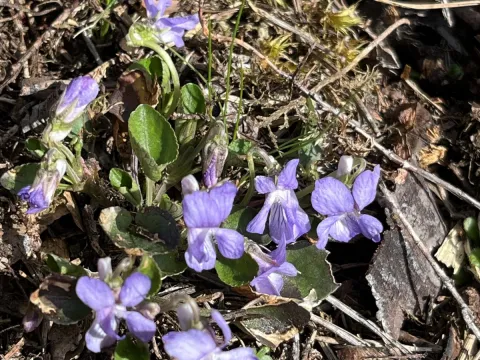
Teesdale violet
Viola rupestris
The Teesdale violet (Viola rupestris) is a perennial herbaceous plant belonging to the Violaceae family. It is typically found in rocky habitats, limestone pavements, and open, dry grasslands across various regions of Europe and Asia.
What the section contains
Teesdale violet
This species is highly adapted to low-nutrient environments. It forms low-growing rosettes and is prized in specialty horticulture for its delicate appearance and alpine character.
Regarding soil requirements, Viola rupestris demands excellent drainage. In a garden setting, it should be planted in gritty, porous substrates that prevent any risk of waterlogging at the root zone.
The plant thrives in full sun or light partial shade. It is well-suited for rock gardens and troughs where soil moisture can be strictly controlled to mimic its native alpine environment.
Climate tolerance is a key feature of this violet. It is extremely hardy in winter, but it requires protection from excessive heat and humidity during the summer months to maintain its health and vigor.
The primary threats to Viola rupestris are fungal pathogens, specifically those causing root rot. These are almost always linked to poor drainage or overly stagnant atmospheric humidity.
Pests such as aphids and spider mites frequently attack the foliage, especially when the plant is stressed by heat or drought. Regular inspection is essential for early detection.
Slugs and snails are major threats to the young foliage. Protective measures such as physical barriers or environmentally safe molluscicides should be implemented during early spring.
Leaf spots caused by various fungi can occur if the plant is grown in overly crowded conditions without proper air circulation. Pruning and thinning surrounding vegetation can help mitigate this.
Viral infections, while less common, can cause stunted growth and leaf discoloration. The best practice is to isolate or remove affected plants immediately to prevent the spread of the virus.