
Viola allchariensis
Viola allchariensis
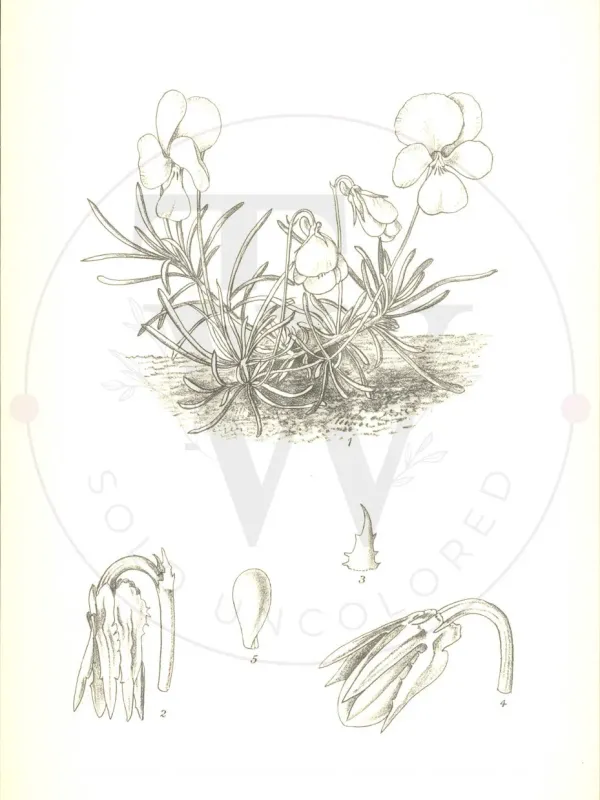
Description
Growing requirements
Viola allchariensis is a distinct perennial herbaceous plant belonging to the Violaceae family. It is recognized as a narrow endemic species restricted to specific mountainous regions in the Balkans, particularly in the vicinity of the Allchar site in North Macedonia.
The plant is biologically notable for its adaptation to metalliferous soils, thriving in environments rich in heavy metals like arsenic and antimony. This extreme tolerance makes it a significant subject for studies in plant physiology and metal accumulation mechanisms.
In terms of habitat, the species prefers rocky, well-drained limestone or serpentine substrates. It is highly adapted to the harsh conditions of alpine and sub-alpine zones, where temperatures fluctuate significantly and water retention in the soil is naturally limited.
The species requires high solar radiation and thrives in open, exposed areas. It is generally not found in dense vegetation patches, as it is a poor competitor against faster-growing grasses and shrubs, preferring niches where competition is minimal.
While not a traditional agricultural crop, Viola allchariensis holds ecological value as a sentinel species for tracking environmental changes in its localized distribution area. Conservation of this species remains a priority due to its narrow endemic nature.