
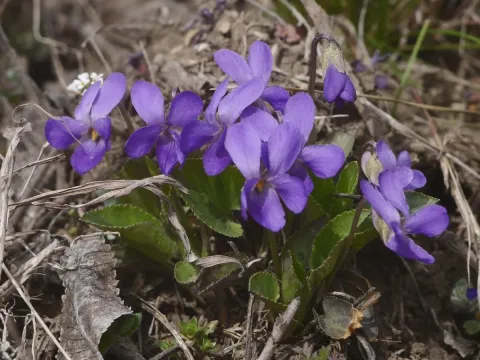
Viola ambigua
Viola ambigua
Viola ambigua, commonly known as the doubtful violet, is a perennial plant belonging to the Violaceae family. It is a distinctive species native to the woodland edges and steppe regions of Eastern and Central Europe, adapted to temperate climate zones.
What the section contains
Viola ambigua
The botanical structure of the plant features a rosette of basal leaves and a well-developed rhizome system. Its purple or blue flowers are morphologically adapted to insect pollination, typically blooming during the spring season to maximize reproductive success.
Environmental requirements for Viola ambigua include well-drained, nutrient-rich soils with a neutral pH level. The plant thrives in habitats that provide moderate sunlight, such as woodland clearings, while being relatively resilient to temporary moisture deficits.
Regarding cultivation, this plant is best suited for rock gardens, meadow-style landscaping, and wild-flower conservation areas. Its ability to tolerate semi-shaded conditions makes it a versatile choice for naturalistic garden designs.
The cultural significance of the species extends to its role in maintaining regional biodiversity. While not a large-scale agricultural crop, it is often utilized in restoration ecology to stabilize soil and provide early-season nectar for local pollinator populations.
The main pathological threats to Viola ambigua involve fungal pathogens such as downy mildew and leaf spots, which are facilitated by humid, stagnant air conditions. Preventing these issues requires adequate spacing and proper site aeration.
Insect pests, including aphids and spider mites, represent the primary biological threat to the plant's health. These pests can severely weaken the plant by feeding on its sap, which often requires prompt but targeted intervention.
Root rot is a significant risk, particularly in heavy or poorly drained clay soils. If the soil remains waterlogged for extended periods, the root system loses its ability to absorb nutrients, leading to rapid decay.
Weed competition is a critical challenge during the establishment phase of the plant. Without regular maintenance or mulching, aggressive grasses can quickly outcompete the violet for sunlight, water, and essential mineral resources.
Environmental degradation, such as soil compaction and habitat loss, poses a long-term threat to the survival of natural populations. Implementing sustainable land management practices is essential for the conservation of this species in its native range.