
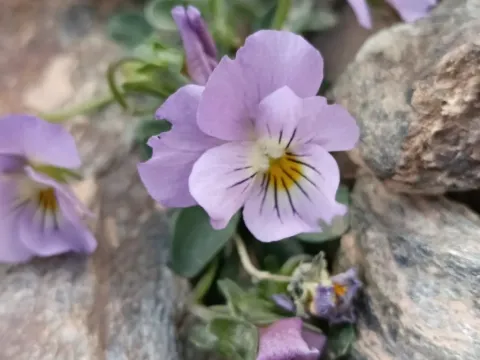
Thick-leaved violet
Viola crassiuscula
Viola crassiuscula, commonly known as the thick-leaved violet, is a rare herbaceous species belonging to the Violaceae family. Native to the high mountain ranges of the Sierra Nevada in Spain, it has evolved to thrive in specialized, harsh rocky environments.
What the section contains
Thick-leaved violet
The plant exhibits distinct botanical traits, most notably its fleshy, succulent-like leaves designed to retain moisture. This adaptation allows the plant to survive in high-altitude conditions characterized by intense solar radiation and minimal soil water retention.
Cultivation requirements for this species are strict, focusing on excellent drainage and mineral-rich, poor soil conditions. It is essential to replicate its natural habitat by using gravel-heavy substrates and ensuring high light exposure to prevent etiolation.
Agronomic management of Viola crassiuscula requires careful monitoring of irrigation levels. Overwatering is the most common mistake in cultivation, as the plant is highly sensitive to root asphyxiation caused by waterlogging in the root zone.
The primary horticultural use of this plant is as a collector's item for rock gardens and specialized alpine landscapes. Its compact growth habit and resilience make it an excellent choice for ornamental gardening in regions that mimic its endemic alpine climate.
Fungal infections, particularly root rot, represent the most significant threat to the survival of the plant. Maintaining adequate ventilation around the foliage and ensuring the drainage remains unobstructed are crucial prevention measures.
Insect pests, such as aphids and spider mites, can cause damage to the leaves if the plant is grown in unfavorable conditions. Regular inspection and the use of targeted treatments are recommended for those growing the plant in restricted or artificial environments.