
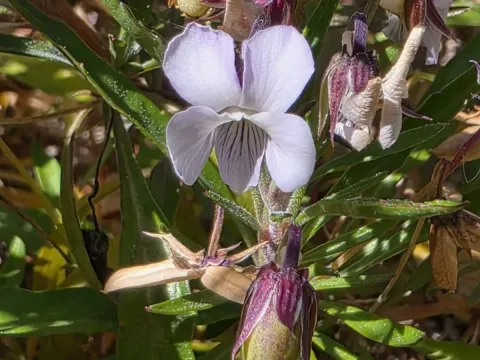
Tree violet
Viola arborescens
Viola arborescens, commonly known as tree violet, is a distinct species belonging to the Violaceae family. Unlike herbaceous violets, this plant develops woody stems, giving it the characteristic appearance of a small subshrub.
What the section contains
Tree violet
The species is native to the western Mediterranean, primarily found in Spain and southern France. It thrives in rugged, calcareous terrain and open rocky slopes, which defines its preference for specific mineral-rich soils.
Cultivation requires full sun exposure and extremely well-drained, alkaline soil. Due to its adaptation to arid environments, the plant does not tolerate high humidity or waterlogged soil, which are the primary causes of failure in managed landscapes.
Temperature management is crucial as the plant prefers moderate climates. It is adapted to survive dry summers, making it an excellent candidate for xeriscaping, provided it is protected from extreme frosts and excessive soil moisture during winter months.
The economic value of this culture is rooted in ornamental horticulture. It is highly sought after by collectors of Mediterranean flora and enthusiasts of low-maintenance, drought-tolerant garden designs, though it remains a specialty plant.
The most common health issues for Viola arborescens involve fungal pathogens that affect the root system. Overwatering is the single most significant threat, leading to root rot and irreversible decline of the woody structures.
Pest management is focused on controlling aphids and spider mites, which can become problematic during hot, dry periods. Integrated pest management strategies are recommended to maintain plant health without compromising its delicate ecological balance.