
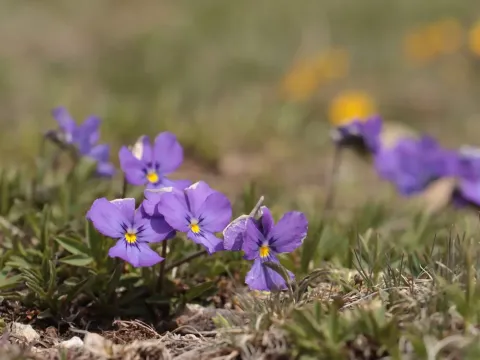
Spur violet
Viola calcarata
Sowing spur violet (Viola calcarata) is best achieved in early spring or autumn. Due to its alpine origins, the seeds require a period of cold stratification to break dormancy and ensure high germination rates.
What the section contains
Spur violet
For container cultivation, sow the seeds in a moist, sterile seed-starting mix. Cover them lightly with vermiculite and keep the container at a steady temperature of around 16–18 degrees Celsius until sprouting occurs.
If sowing directly outdoors, prepare the bed by loosening the soil and incorporating organic matter. Ensure the site receives partial to full sun, as seeds need light to germinate successfully.
Once the seedlings are large enough to handle, prick them out into individual pots to develop a robust root system. This process helps the young plants become hardy enough for final transplanting.
Gradual acclimatization to outdoor conditions over a week or two is recommended before moving the plants to their permanent location in the rock garden or flower border.
Viola calcarata thrives in cool, well-drained environments. It is native to high-altitude meadows, meaning it prefers soils that are slightly acidic to neutral and rich in humus but never waterlogged.
Adequate sunlight is essential for healthy growth and maximum flower production. However, in regions with very hot summers, providing light afternoon shade can prevent heat stress and foliage scorching.
Regular watering is necessary to keep the soil consistently moist but not saturated. Mulching around the base of the plant with small stones or pebbles helps regulate soil temperature and retain moisture.
The plant is highly frost-tolerant and does not require extensive winter protection in most climates. It is best suited for alpine rock gardens, where its natural drainage needs are met by the substrate.
Avoid heavy fertilizers that encourage lush foliage at the expense of flowering. A balanced, slow-release fertilizer applied sparingly in early spring is usually sufficient to support the growing season.
The spur violet is valued primarily for its ornamental aesthetic. Its long-lasting, vibrant flowers make it a perfect candidate for rock gardens, trough planters, and alpine-themed landscapes.
High yields of blooms are achieved through consistent deadheading. By removing spent flowers, the plant is prevented from setting seeds, allowing it to re-bloom throughout the late spring and summer months.
In nursery settings, propagation is often done via division of mature clumps every two to three years. This maintains plant vigor and provides a reliable supply of new stock for seasonal sales.
Its compactness makes it an excellent choice for border edgings where color contrast is desired. It performs reliably when planted in clusters, creating a dense and colorful floral display.
Market demand for this species is driven by interest in native and rock-garden-appropriate plants that offer color with relatively low maintenance requirements compared to bedding annuals.
Common plant health issues include powdery mildew, especially if the plants are placed in areas with poor air circulation. Improving spacing and thinning out overly dense patches can mitigate this risk significantly.
Root rot is the most serious threat, typically resulting from improper drainage or excessive irrigation. Ensuring the planting medium is sandy and well-draining is the most effective preventative measure.
Pests like aphids and spider mites can infest foliage, particularly in hot and dry weather. Monitor leaves for signs of discoloration and apply insecticidal soap if an infestation is identified.
Slugs and snails often pose a problem for emerging shoots, particularly during rainy spring seasons. Implementing copper tape barriers or eco-friendly baits can protect young plants from significant grazing damage.
- Ensure proper air circulation to prevent fungal growth.
- Use gravel mulch to keep foliage away from soil contact.
- Apply biological control agents for persistent pest issues.