
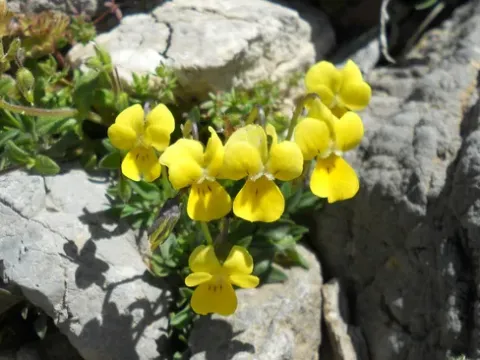
Sweet violet
Viola fragrans
Propagation of sweet violet (Viola odorata) is primarily achieved through division of established clumps or by planting runners during the late summer or autumn.
What the section contains
Sweet violet
Seeds can also be sown outdoors in the autumn, allowing them to undergo natural stratification, which is critical for achieving uniform germination in spring.
For greenhouse or container production, seeds are sown in early spring or winter, requiring consistently cool temperatures and moist, well-draining soil.
When starting from divisions, ensure that each segment has a healthy root system and at least a few developed leaves to promote rapid establishment.
Planting density should be managed to prevent overcrowding, which is essential to maintain good air circulation and prevent the development of fungal pathogens.
Sweet violet belongs to the Violaceae family and is a low-growing perennial herb valued for its aromatic properties and medicinal content.
The crop thrives in fertile, humus-rich, and slightly acidic to neutral soils that maintain consistent moisture levels throughout the growing season.
Optimal site selection involves partial shade conditions, as excessive heat and direct sunlight during mid-summer can severely stress the plant.
Adequate water management is paramount, as the plants require high humidity and consistent soil moisture without waterlogging, which causes root rot.
Soil amendments with organic matter are highly recommended before planting to improve structure and support the nutrient requirements of the crop.
Production focuses on the harvest of both flowers and leaves, which are used in the perfume industry and pharmaceutical sector respectively.
Flowering occurs during early spring, and peak yields of essential oil are obtained when blossoms are harvested at the peak of their scent profile.
Yields are typically highest in the second year of cultivation after the plants have fully established a dense ground cover.
Proper weed management is essential for maximizing yield, as invasive species can quickly compete with violets for space and soil nutrients.
Annual maintenance of the plantation, including deadheading and division, helps maintain the longevity and productivity of the crop over several years.
Powdery mildew represents a significant threat, especially when plants are grown in conditions with poor airflow and high humidity fluctuations.
Grey mold (Botrytis) can affect the flowers and foliage during prolonged wet periods, requiring quick intervention and removal of diseased material.
Slugs and snails are common pests that feed on the soft tissue of leaves and flowers, often necessitating manual control or integrated pest management.
Leaf-eating caterpillars, such as those of the fritillary butterflies, can cause substantial damage if populations are not monitored regularly.
Preventative measures, such as maintaining cleanliness in the planting area and avoiding over-fertilization with nitrogen, are key to minimizing threats.
Manual harvesting of flowers is essential, as the delicate blossoms require careful handling to preserve their aromatic integrity for essential oil extraction.
Harvesting should occur in the morning after the dew has evaporated but before the heat of the day reaches its peak intensity.
Rhizomes are harvested in the autumn, cleaned thoroughly, and dried at low temperatures to retain their medicinal active compounds for pharmacological use.
Leaves are collected throughout the season and are often processed by drying or extracting, depending on the requirements of the final consumer product.
Post-harvest handling must be efficient, with raw material processed or dried immediately to prevent degradation of volatile organic compounds.