
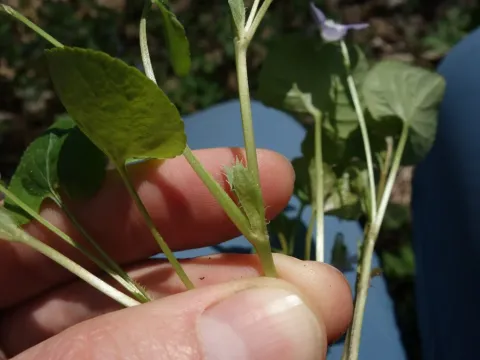
Don violet
Viola tanaitica
The Don violet (Viola tanaitica) belongs to the Violaceae family. It is a perennial herbaceous plant native to the arid steppe regions of the Eastern European plains.
What the section contains
Don violet
Botanically, the species is characterized by its rosette growth habit and solitary zygomorphic flowers. It has evolved specific adaptations to thrive in high-light environments, distinguishing it from shade-loving forest violets.
The plant demands well-drained, alkaline, or carbonate soils. It thrives in open field conditions where direct sunlight is abundant, as it has high photosynthetic efficiency under intensive solar radiation.
Climatic requirements involve a high tolerance to seasonal moisture fluctuations. The species possesses a sturdy root system that allows it to maintain vigor even during the dry summer months common in its native range.
In terms of agricultural and horticultural use, Viola tanaitica is primarily recognized for its value in xeriscaping, steppe restoration projects, and as a specialized ornamental for dry, rocky garden installations.
Powdery mildew is the most common fungal disease affecting Don violet, particularly during humid seasons or when air circulation around the plants is inadequate.
Root rot, induced by excessive irrigation or poor drainage in clay-heavy soils, can be fatal for this species. Proper soil structure is essential for long-term survival.
Pests such as spider mites and aphids are known to feed on the foliage, which can stunt the growth and drastically reduce the aesthetic quality of the flowers.
Leaf-feeding larvae may occasionally cause significant damage, especially in areas where natural predator-prey balance is disrupted by chemical intervention.
Management strategies should focus on preventive measures, such as maintaining optimal plant spacing, promoting biodiversity to control pests, and ensuring excellent soil drainage.