
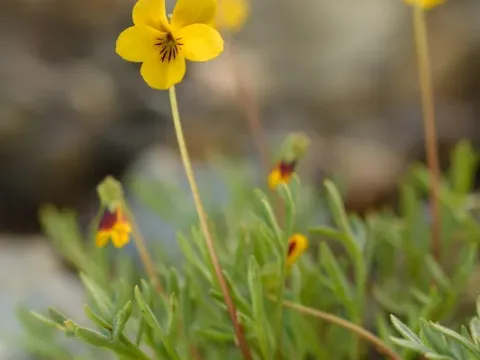
Douglas violet
Viola douglasii
Douglas violet (Viola douglasii) is a perennial herbaceous plant belonging to the Violaceae family. Propagation primarily occurs through seeds, which often require a period of cold stratification to overcome dormancy and ensure uniform germination in a controlled environment.
What the section contains
Douglas violet
For outdoor sowing, it is recommended to plant seeds in late autumn, allowing the natural winter chill to prepare the embryo for spring awakening. If sowing in containers, seeds should be placed in a free-draining substrate and kept in a cool location with moderate light exposure.
The germination period can be extended, so growers must maintain consistent soil moisture without saturating the medium. Once true leaves appear, seedlings can be carefully transplanted, ensuring minimal disturbance to the developing root system.
Selecting an appropriate sowing site is crucial; it should provide excellent drainage and protection from extreme temperature fluctuations. Using high-quality seed starter mixes with a neutral pH will provide the best environment for early development.
Spacing between plants should allow for proper air circulation, which is essential for preventing dampening off and other early-stage seedling diseases. Proper spacing also ensures that each individual plant has sufficient access to essential nutrients and light.
Native to western North America, Viola douglasii thrives in open, sunny locations with well-drained, often stony or sandy soils. It is an ideal plant for rock gardens, where natural drainage characteristics mimic its native habitat conditions.
The cultural requirements center on low moisture retention in the soil during the plant's dormant phase. While it requires regular irrigation during the active growth period, excessive wetness—particularly in warm weather—will inevitably lead to root decay.
Climate adaptability for this species is high regarding cold tolerance, but it can struggle in regions with excessively humid, hot summers. It is best suited for climates with distinct seasonal changes where the soil can dry out during the summer months.
Fertilization should be kept to a minimum, as these plants are well-adapted to nutrient-poor soils. An occasional application of a balanced, low-nitrogen organic fertilizer in early spring can support vigorous blooming without encouraging excessive foliage growth.
Sun exposure is a critical success factor; while it can tolerate light afternoon shade in hotter zones, full sun is necessary for the plant to maintain its compact, attractive growth habit and produce abundant flowers throughout the season.
The most significant threat to the Douglas violet is the presence of fungal pathogens causing root rot. These organisms flourish in poorly drained soils where water accumulates, damaging the root hairs and preventing effective nutrient uptake by the plant.
Powdery mildew is another common issue, especially when air circulation around the foliage is limited. This disease creates a white, dusty layer on the leaves, which can reduce photosynthetic efficiency and eventually weaken the entire plant if left untreated.
Insect pests such as spider mites and aphids are known to feed on the tender tissues of the plant. These pests can rapidly colonize stressed plants, leading to leaf discoloration, stunting, and an overall decrease in the plant's aesthetic and biological value.
Management strategies involve rigorous sanitation practices, including the removal of dead foliage and debris where pests may overwinter. Using targeted horticultural soaps or oils can effectively control minor infestations without damaging beneficial garden insects.
To ensure long-term plant health, monitoring soil moisture levels and ensuring proper irrigation techniques are paramount. By avoiding overhead watering, growers can significantly reduce the risk of foliage-based diseases and maintain a healthy, thriving population.