
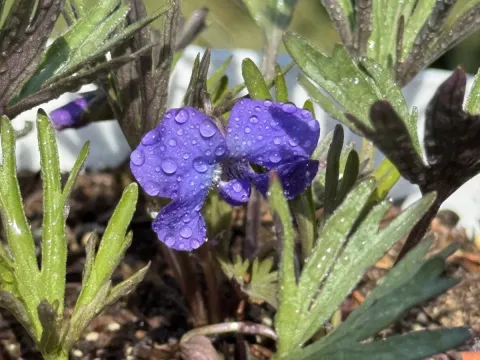
Prairie violet
Viola pedatifida
The Prairie violet (Viola pedatifida) is a herbaceous perennial plant belonging to the Violaceae family. Native to the prairies of North America, this species has adapted to thrive in open, sunny habitats with well-draining soil conditions, making it a robust choice for gardens.
What the section contains
Prairie violet
Botanically, the plant is distinguished by its deeply dissected leaves that resemble a bird's foot, which is the origin of its scientific name. Growing in compact clumps, the plant typically reaches a height of about 6 to 8 inches, producing a profusion of violet-blue flowers during the spring months.
For successful cultivation, Prairie violet requires a site with full sun and soil that is neither too heavy nor prone to waterlogging. It is highly valued for its drought tolerance once established and its ability to withstand the climatic extremes typical of prairie ecosystems.
In terms of хозяйственное использование, this plant is primarily utilized in ornamental landscaping and ecological restoration projects. It serves as an excellent ground cover for rock gardens, sunny borders, and meadows designed to support native pollinators and local biodiversity.
Agrotechnical management is relatively straightforward: it involves minimal maintenance, such as occasional watering during severe dry spells and ensuring the plant is not outcompeted by aggressive weeds. Propagation can be achieved through seeds, which often perform best when sown during the cooler fall season.
While generally hardy, Prairie violet can suffer from powdery mildew or fungal leaf spots if environmental conditions are overly humid or if there is poor ventilation. Planting in an airy, open spot with proper spacing is the most effective cultural practice to mitigate these risks.
Insects like aphids or spider mites may occasionally infest the plants, particularly during stressful, hot periods. Monitoring for signs of leaf distortion or discoloration is recommended, with early intervention using soft soap solutions or horticultural oils usually sufficient to resolve minor pest issues.