
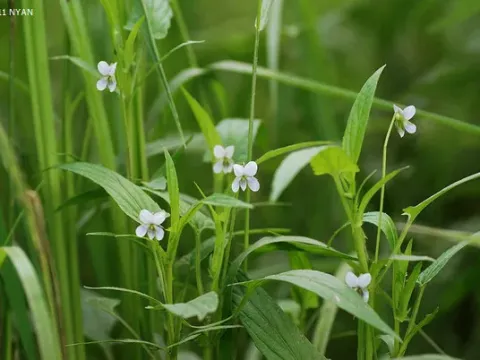
Radde's violet
Viola raddeana
Radde's violet (Viola raddeana) is a perennial herbaceous plant belonging to the Violaceae family. It is recognized primarily for its ecological value rather than agricultural utility, serving as a distinct component of alpine and subalpine vegetation in East Asia.
What the section contains
Radde's violet
The native range of this species covers specific regions of the Russian Far East, the Korean Peninsula, and northeastern China. It typically inhabits rocky slopes, scree deposits, and gravelly forest edges, where it demonstrates a high degree of adaptation to poor and shallow soils.
Botanically, the plant is characterized by a condensed growth habit and a specialized root system that allows it to survive in nutrient-poor mineral substrates. These features are critical for its survival in high-altitude environments where growing seasons are short and environmental stresses are intense.
The plant has strict requirements for its growth environment. It demands excellent drainage and a neutral to slightly acidic pH level. Because it is highly sensitive to waterlogging and the competition of vigorous agricultural weeds, it cannot be cultivated in typical field conditions.
In terms of practical use, Viola raddeana is not an agricultural commodity. It is strictly a conservation subject, often monitored by botanical institutes to prevent its extinction due to environmental degradation and habitat fragmentation in its fragmented natural range.
The primary threats to Viola raddeana involve habitat loss and direct environmental impact. As a specialized species, it lacks the plasticity required to adapt to rapidly changing landscapes, making it particularly vulnerable to local extinction caused by industrial or infrastructure projects.
Biological threats include fungal pathogens that thrive during humid spells, causing root rot in rocky cracks. While it is rarely affected by large-scale agricultural pests, insects that feed on alpine foliage can cause localized damage to the reproductive organs, limiting seed production during unfavorable years.