
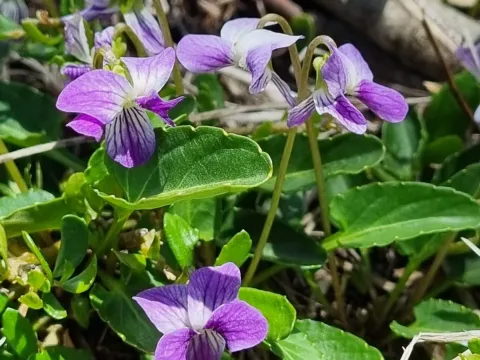
Showy violet
Viola betonicifolia
The showy violet (Viola betonicifolia) is a perennial herbaceous plant belonging to the Violaceae family. It is distinct for its elongated, lanceolate leaves, which provide a unique appearance compared to more common violet species.
What the section contains
Showy violet
The native habitat includes parts of East Asia, Australia, and various Pacific islands. This plant thrives in ecosystems with moderate moisture and light shade, making it adaptable to specific landscape requirements.
Cultivation requires well-drained, nutrient-rich soil with adequate organic content. Providing a consistent moisture regime is essential, but the substrate must allow excess water to drain to prevent root system suffocation.
Biologically, it is an acaulescent plant, meaning it lacks a visible stem above ground, growing instead from a robust, short rhizome. The flowers are typically held upright on stalks, appearing above the foliage during the peak growing season.
Economic and practical applications of this species are primarily found in traditional medicine and specialized horticulture. The plant is valued for its potential therapeutic properties in various herbal preparations used across its native range.
The primary threats to Viola betonicifolia include fungal pathogens such as grey mold (Botrytis) and powdery mildew, which often develop in stagnant or overly humid conditions.
Common insect pests include spider mites and aphids, which target the tender parts of the plant during periods of low rainfall or high ambient temperatures.
Effective management involves maintaining adequate spacing between plants to ensure good airflow, which significantly reduces the risk of fungal outbreaks.
Regular monitoring of foliage is vital for early detection of pest activity, allowing for swift intervention before the plant's structural integrity is compromised.
Good agricultural practices, such as site sanitation and the removal of decaying leaves, are essential to minimize the survival of pathogens and pests within the cultivation area.